Japan has one of the best transport networks on earth — fast, punctual, spotless, and easy to use once you know the basics. This guide covers how to actually get around like a local: trains and the truth about rail passes, IC cards, buses, flights, car rental, and the unwritten etiquette that keeps it all running smoothly.
Building a full trip? Pair this with our planning guide and cost breakdown.
Trains: The Backbone of Getting Around
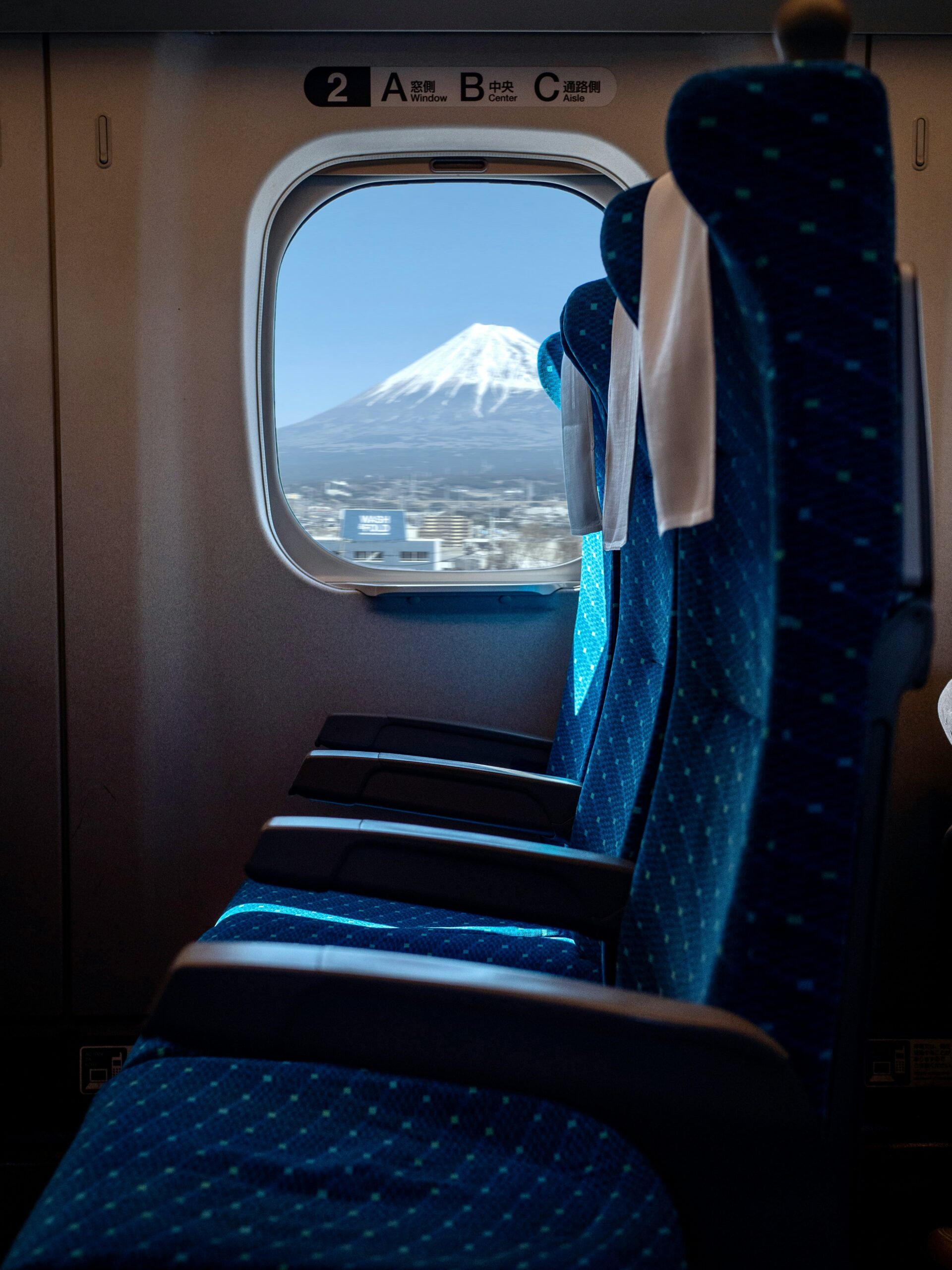
Trains are the best way to travel in Japan — fast, frequent, and reliable to the minute. The network splits into two: Japan Railways (JR), the nationwide operator that runs the Shinkansen and most intercity lines, and private railways (shitetsu), which handle many city and suburban routes (and aren’t covered by JR passes). The Shinkansen connects Tokyo and Osaka in about 2.5 hours on the fastest Nozomi, and reaches Hokkaido and Kyushu through long tunnels and bridges.
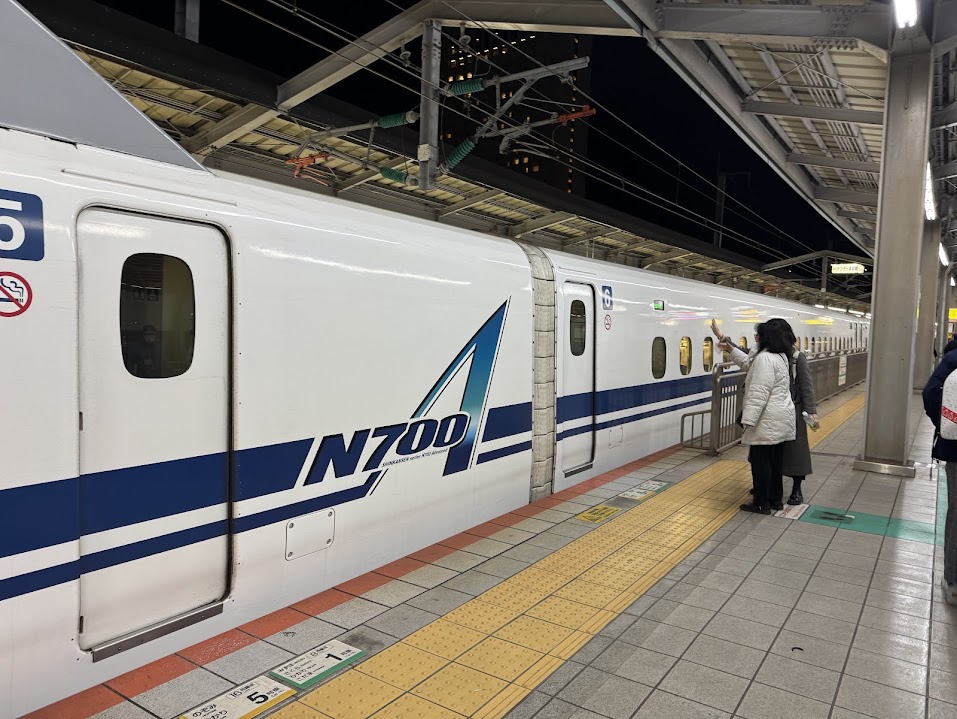
Riding the Shinkansen
Most Shinkansen cars are reserved, with a few non-reserved cars (cheaper, first-come). For a long haul, the first-class Green Car is a worthwhile treat. Two practical things to know: grab an ekiben (station bento box) and a drink before you board — eating on the Shinkansen is part of the experience — and if you’re carrying oversized luggage (over 160 cm in total dimensions), reserve a seat with a luggage space in advance or you may be charged. Note that an ordinary IC card won’t tap you through Shinkansen gates: buy a ticket, use a pass, or register for Smart EX.
The JR Pass: Is It Still Worth It?
For years the Japan Rail Pass was an automatic buy. Not anymore. After the 2023 price hikes it costs ¥50,000 (7-day) and ¥80,000 (14-day), so for the classic Tokyo–Kyoto–Osaka trip it usually costs more than buying individual tickets. It pays off only if you cover a lot of long-distance ground fast — think Tokyo to Hiroshima and on to Kyushu in a single week.
- Do the math first. Add up your shinkansen legs and compare to the pass. We walk through it in the planning guide.
- Regional passes often win. The JR Kansai-Hiroshima, all-Kyushu, Hakone Free Pass, Kansai Thru Pass, and Tokyo Subway Ticket are far better value for focused trips. Compare options on Klook.
- Reserve your seats. Free with a pass, cheap without — do it at a JR ticket office (Midori no Madoguchi) or online, especially in peak season.
IC Cards: Tap for Almost Everything
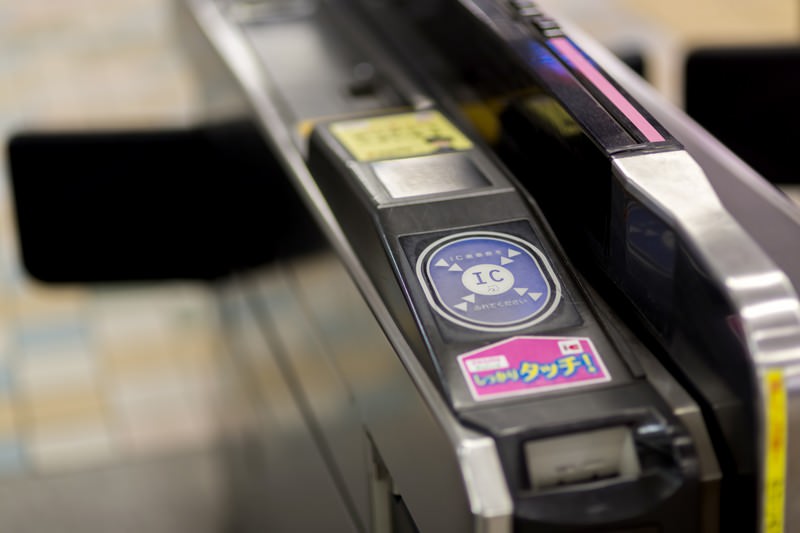
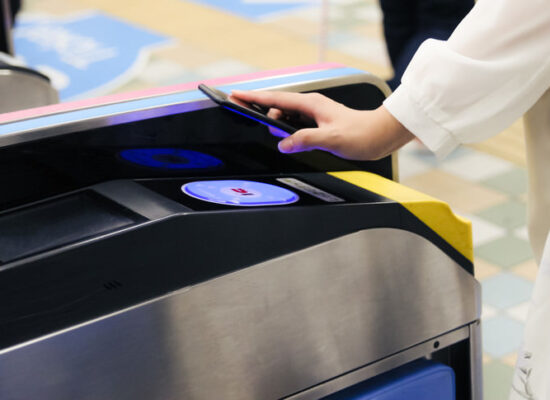
A prepaid IC card (Suica, Pasmo, or Icoca) is the single most useful thing in your pocket. Tap through the gates on trains, subways, and buses, and pay at convenience stores, vending machines, and many restaurants. The major cards are mutually compatible across most of the country, though a few rural lines still don’t take them.
Getting one in 2026: unregistered Suica and Pasmo cards returned to sale on March 1, 2026, after a long chip-shortage suspension. Tourists can also grab a Welcome Suica (no deposit) at the airport and major-station JR East Travel Service Centers, or use the Welcome Suica Mobile app on an iPhone (8 or later). Top up at any station or convenience store. Personally, I use Mobile Suica on my phone and love it — if the balance runs low, I just top it up instantly with a credit card, no machine required.
Apps That Make It Easy
Google Maps is the simplest way to navigate Japan’s transit — it nails routes, platforms, times, and fares in English. Jorudan and Navitime are great alternatives with more rail-specific detail. Set up an eSIM or pocket Wi-Fi so you have data the moment you land — an Airalo eSIM is the easy option.
Buses: The Budget Option
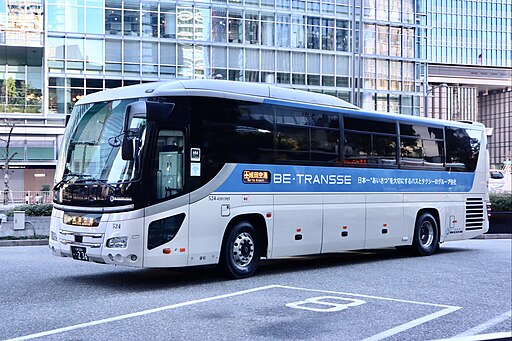
Highway buses are the cheapest way to cover long distances. Tokyo to Osaka runs roughly ¥4,000–¥15,000 depending on comfort, versus the train, and takes about 8.5 hours instead of 2.5. The trade-off is time, but overnight buses are popular because they save you a night’s accommodation too — and premium seats come with power outlets, privacy curtains, and deep reclines.
Within cities and in rural areas with no train, local buses fill the gaps. Signage is often Japanese-only, but Google Maps or Navitime make them easy to ride.
Train vs Bus: Quick Comparison
| Tokyo → Osaka | Time | Cost | Best for |
|---|---|---|---|
| Shinkansen | ~2.5 hours | ~¥14,000 | Speed, comfort, daytime travel |
| Highway bus | ~8.5 hours | from ~¥5,500 | Budget, overnight, saving a hotel night |
In short: trains for speed and reliability between cities, buses for saving money and reaching places trains don’t.
Getting Around Cities: Subways and Taxis
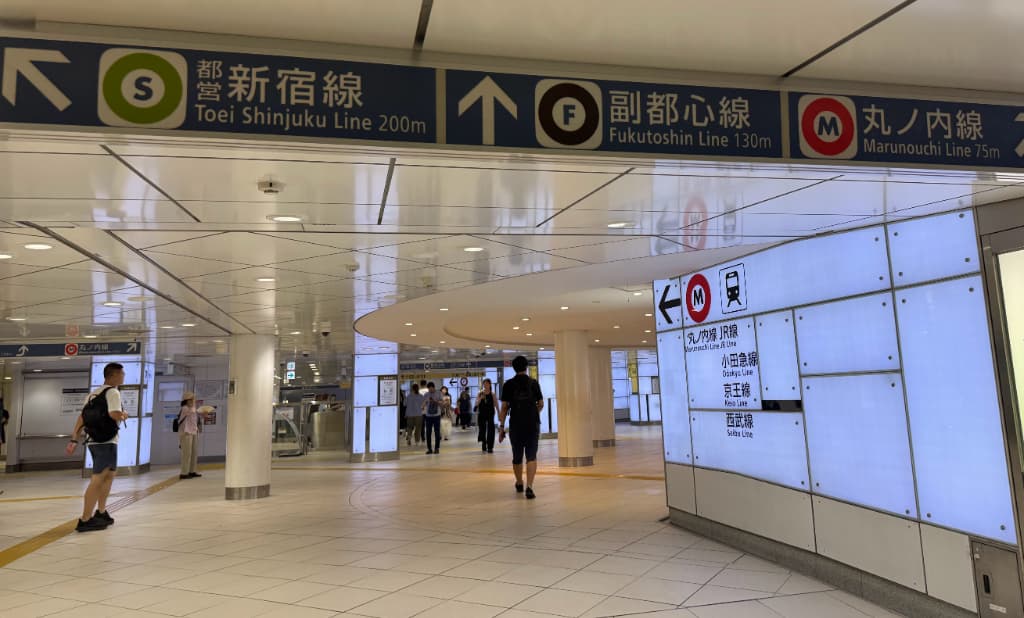
Within Tokyo, Osaka, and other big cities, subways are the fastest way around. Lines are colour-coded and every station has a letter-and-number code (like “G-09”), so you can navigate without reading any Japanese — just match the code in Google Maps. For a sightseeing-heavy day, a pass like the Tokyo Subway Ticket (24/48/72 hours) or the Kansai Thru Pass quickly pays for itself.
Taxis are clean, safe, and everywhere, but pricey. They’re most useful late at night, once the trains stop (most lines finish around midnight). Hail one on the street or book through the GO app; Uber exists in big cities but mostly dispatches regular taxis.
Flights, Cars, and Cycling
Domestic Flights
For Okinawa or the far reaches of Hokkaido, flying beats the train on time and often on price. ANA and JAL cover everywhere, while low-cost carriers like Peach and Jetstar are cheap if you book ahead and travel light. Just factor in the time and cost of getting to and from the airport.
Car Rental
You rarely need a car in the cities, but it’s the best way to explore rural Tohoku, Hokkaido, and the Okinawan islands, where trains thin out.
- You’ll need an International Driving Permit (IDP) from your home country — it can’t be issued in Japan. Note that drivers from a few countries (Germany, France, Switzerland, Belgium, Taiwan, and others outside the 1949 Geneva Convention) instead need an official Japanese translation of their license.
- Drive on the left, watch the lower speed limits, and get an ETC card for cashless highway tolls. Most signs include English.
Cycling
Renting a bike is a lovely way to explore flat, compact cities like Kyoto or Nara, or to ride a dedicated route like the famous Shimanami Kaido across the islands of the Seto Inland Sea. For most trips, the sweet spot is trains and buses for distance, plus a bike to explore once you’re there.
From the Airport, and Between Them
- Haneda → central Tokyo: 15–30 minutes by Tokyo Monorail or Keikyu Line; buses take 30–60.
- Narita → Tokyo: the Keisei Skyliner reaches Ueno in about 36 minutes, the Narita Express (N’EX) Tokyo Station in about 55. Buses are cheaper but slower.
- Haneda ↔ Narita: 65–90 minutes by Limousine Bus or via the Keikyu/Keisei lines — allow extra time in traffic.
- Kansai (KIX) → Osaka/Kyoto: the JR Haruka express reaches Kyoto in about 80 minutes; the Nankai line and Rapi:t reach Namba in around 40.
Tip: register on Visit Japan Web before you fly to breeze through immigration and customs on arrival.
Travel Light: Luggage Delivery
One of Japan’s best-kept travel secrets: takkyubin (luggage forwarding, e.g. Yamato Transport). For around ¥2,000 a bag, send your big suitcase ahead to your next hotel and travel between cities hands-free. No more wrestling a suitcase up station stairs or onto a packed train.
Public Transport Etiquette
Japan’s transport runs smoothly partly because everyone follows a few quiet rules. Blend in with these:
- Keep your phone on silent and don’t take calls — trains are notably quiet.
- Keep conversations low; loud talking stands out.
- Queue along the platform markers and let passengers off before you board.
- In a crowd, wear your backpack on your front so it’s out of the way.
- Eating is fine on the Shinkansen (ekiben bento are part of the fun) but avoid it on local commuter trains.
Frequently Asked Questions
Do I need a Japan Rail Pass?
Often not. Since the 2023 price rise, the nationwide pass usually costs more than point-to-point tickets for a Tokyo–Kyoto–Osaka trip. It’s worth it only for lots of long-distance travel in a short time. Add up your route, and look at regional passes first.
Where do I get a Suica or Pasmo card?
Unregistered cards are sold again at station machines as of March 2026. Tourists can also get a Welcome Suica at airport and major-station JR East Travel Service Centers, or add Welcome Suica Mobile to an iPhone. Top up at stations or convenience stores.
Can I use one IC card all over Japan?
Mostly. Suica, Pasmo, Icoca and the other major cards are mutually compatible across most cities and regions, so one card works almost everywhere — but a handful of rural lines and buses still don’t accept them.
Should I take the train or the bus between cities?
Train if your time matters — the Shinkansen is three times faster. Bus if budget matters, especially overnight buses that also save a night’s hotel.
Do I need to rent a car?
Not for the cities — trains are faster and easier. A car is worth it for rural Tohoku, Hokkaido, and the Okinawan islands. You’ll need an International Driving Permit (or an official translation, depending on your country).
Final Tips
Get an IC card, put Google Maps on a data connection, forward your big bag ahead, and you’ll move around Japan as smoothly as a local. For where to go and when, see our guides to the best places to visit by region, the best time to visit, and ready-made 2-week itineraries.

6 thoughts on “How to Get Around Japan Like a Local: The Complete Transport Guide (2026)”