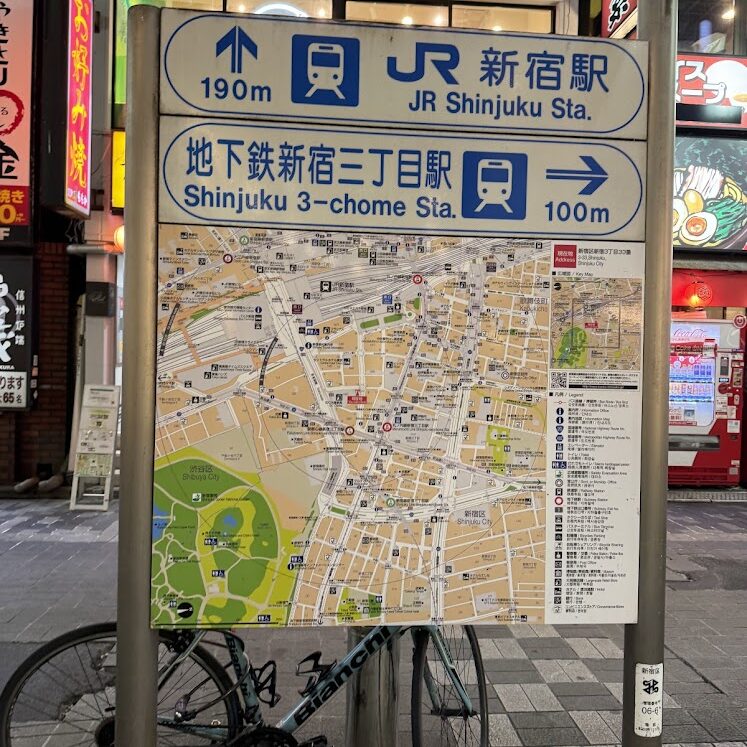
You’ve landed in Tokyo, you don’t speak a word of Japanese, and the signs are a wall of characters. Panic? Not at all. Japan is one of the easiest countries in the world to travel without the local language — thanks to world-class infrastructure, genuinely helpful people, and translation tech that does the heavy lifting. Here’s exactly how to get by, and the handful of words and characters that make it even smoother.
This guide focuses on the language side. For the practical logistics, see our guides to getting around and everyday etiquette.
Why English Isn’t Widely Spoken
If you’ve travelled elsewhere in Asia, Japan can feel surprisingly low on spoken English — it consistently lands in the “low proficiency” band on global English rankings. A few reasons why:
- It isn’t needed day to day. Japan’s economy and daily life run almost entirely in Japanese, so most people rarely use English after school.
- Education is in Japanese. Everything from primary school to medical degrees is taught in Japanese, so you can excel professionally without it.
- English is taught as an exam subject, more like Latin in the West than a living language — strong on grammar, light on speaking practice.
The upside: many people read basic English better than they speak it, and almost everyone will patiently help if you write things down or hold up a translation app. A little patience goes both ways.
My husband moved here from India with zero Japanese, and his first reaction to the three writing systems — kanji, hiragana, and katakana, all at once — still makes me laugh: “Why did I come to Japan? I should’ve gone to Korea, the alphabet’s simpler.” Coming from multilingual India, what hit him hardest was how completely monolingual Japan is. English really doesn’t get you far here, so go in expecting that rather than being surprised by it.
Phrases Worth Learning
You don’t need to study — but a few words go a long way, and the effort itself is appreciated. Pronunciation doesn’t have to be perfect.
- Sumimasen (すみません) — excuse me / sorry / to get attention. The most useful word you’ll learn.
- Arigatou (gozaimasu) (ありがとう) — thank you.
- Onegaishimasu (お願いします) — please, when asking for something.
- Kore o kudasai (これをください) — I’ll take this (point at a menu or item).
- Ikura desu ka? (いくらですか?) — how much is it?
- … wa doko desu ka? (…はどこですか?) — where is …? (e.g. toire wa doko desu ka? — where’s the toilet?)
- Eigo o hanasemasu ka? (英語を話せますか?) — do you speak English?
- Tasukete! (助けて) — help! — worth knowing for an emergency.
- Daijoubu desu (大丈夫です) — I’m fine / no thank you. Handy for politely declining.
- O-kaikei onegaishimasu (お会計お願いします) — the check, please.
- Oishii! (美味しい) — delicious! — an instant way to make a chef smile.
Phrases You’ll Hear (Not Just Say)
Most guides teach you what to say. Just as useful is recognising the set phrases staff will say to you — they’re scripted and predictable, so a little recognition goes a long way:
- Irasshaimase! (いらっしゃいませ) — “Welcome!”, called out as you enter any shop. No response needed; a nod is plenty.
- Fukuro wa? (袋はご利用ですか?) — “Do you need a bag?” at the register. Answer hai (yes) or daijoubu desu (no thanks).
- Atatamemasu ka? (温めますか?) — “Shall I heat it up?” at a convenience store.
- Point card wa? (ポイントカードは?) — “Do you have a point card?” Just say daijoubu desu.
- Shoushou o-machi kudasai (少々お待ちください) — “One moment, please.”
You Have to Call Staff Over — Here’s Why
In a Western restaurant the server keeps circling back to check on you. In Japan, they wait to be called — so catch their eye and say “sumimasen,” or press the call button on your table (common in izakaya and family restaurants). If you sit there politely waiting to be noticed, you’ll wait a long time.
And it isn’t bad service — it’s the opposite. It comes from a deep reluctance to impose on or disturb someone; hovering over your table would feel intrusive and a little rude. That same humility and shyness is why a passer-by often won’t jump in to help unless you ask first. Once you know the rule, just ask — people are genuinely glad to help the moment you do.
Learn to Read a Few Kanji
You can’t learn the writing system in a week, but recognising a handful of characters genuinely helps you navigate:
- 入口 / 出口 — entrance / exit.
- 男 / 女 — men / women (handy at toilets and baths).
- 駅 — station.
- 円 — yen (you’ll see it on every price).
- 営業中 / 準備中 — open for business / not yet open.
- 無料 / 有料 — free / paid.
A Little Non-Verbal Goes a Long Way
When words fail, gestures carry you surprisingly far — just know a few local ones:
- Pointing is fine. At menus, photos, or items, pointing and a smile gets you a long way.
- A nod or small bow works as hello, thanks, and sorry all at once — you don’t need a deep bow as a visitor.
- Crossed arms in an “X” means “no,” “not allowed,” or “we’re closed/sold out” — a very common signal.
- Hold up fingers for numbers when ordering or asking how many — simple and universally understood.
Let Technology Do the Heavy Lifting
Translation apps have made the language barrier almost disappear:
- Google Translate is the workhorse. The camera mode reads menus and signs instantly, and conversation mode lets you talk back and forth. Download the Japanese language pack before you go so it works offline.
- DeepL often gives more natural translations for longer or trickier sentences.
- Handwriting input lets a local trace a character if neither of you can type it.
All of this needs data, so sort connectivity before you land — an Airalo eSIM or a pocket Wi-Fi keeps you online from the airport onward.
Where English Works, and Where It Doesn’t
In Tokyo, Kyoto, and Osaka, you’ll find English signage, menus, and station announcements throughout the tourist areas — you can get by on English alone. Once you head into rural Japan, spoken English thins out fast. The fix is simple: keep a translation app handy, and write things down or show the Japanese name of your destination. People will go out of their way to help.
As a rule of thumb, you’ll find the most English at big-city stations and airports, major hotel front desks, tourist-area restaurants, and with younger staff. It dries up fastest at small mom-and-pop shops, rural eateries, local buses, and with older shopkeepers — exactly the charming, off-the-beaten-path places worth seeking out, so go armed with an app.
One honest caveat from my husband: the hard part usually isn’t surviving, it’s getting exactly what you want. You’ll find a restaurant on an app, but its sign is in Japanese only, so you walk right past it — and in Tokyo, people generally won’t volunteer directions unless you ask. At attractions, the English signs often carry less detail than the Japanese ones, so you can miss options the locals can see. None of it ruins a trip; just expect to ask, point, and lean on your phone more than you would back home.
Situations Where Language Matters Most
- Pharmacies and symptoms: describing how you feel is hard under pressure — type your symptoms into a translator in advance, or show the affected area.
- Allergies and dietary needs: carry a translated card. Hidden dashi (fish stock) and allergens are easy to miss — more in our food guide.
- Asking directions: show the destination on a map or in Japanese rather than saying it aloud — place names are easy to mishear.
- Emergencies: save key phrases offline, and remember that many areas have English emergency support lines.
Frequently Asked Questions
Can I really travel Japan without speaking Japanese?
Yes, easily — especially in the cities, where English signage and translation apps cover almost everything. Rural areas take a little more patience, but it’s very doable.
Do many Japanese people speak English?
Spoken English is limited, but many people read basic English and will happily help if you write things down or use an app. Tourist areas have far more English support.
What’s the best translation app for Japan?
Google Translate, for its camera and conversation modes — just download the offline Japanese pack first. DeepL is great for longer sentences.
Should I bother learning any Japanese?
A few words like sumimasen and arigatou aren’t strictly necessary, but they’re warmly received and make interactions friendlier. The effort matters more than the accent.
Is it rude to speak English to locals?
Not at all — but opening with a quick “sumimasen” and a smile, rather than launching straight into English, is appreciated everywhere.
Visiting vs. Living Here
One distinction worth making: everything above is about travel, where you can sail through on apps and a smile. Living here is a different story. My husband describes the quiet isolation of not being able to read — a bookshop, a library, a newspaper all become blank walls, and you’re the only one in the room who doesn’t know what’s going on. For a two-week trip that barely matters; if you’re moving here, learning to read is what genuinely lifts your quality of life. Plenty of long-term expats live happily with limited Japanese, but the ones who learn to read never regret it.
Final Thoughts
Traveling Japan without Japanese isn’t just possible — it’s smooth and rewarding. Lean on the apps, learn a few words, recognise a few characters, and you’ll be fine just about anywhere. And the small effort to meet people halfway is exactly what turns a trip into a connection. Next, plan the rest with our trip-planning guide.

One thought on “How Hard Is It to Travel in Japan Without Speaking Japanese? (2026)”