Japan is famous for its food, but if you’re vegan or vegetarian, that reputation comes with a catch. A lot of the dishes that look plant-based — a bowl of miso soup, a pile of simmered vegetables, a clear noodle broth — quietly lean on fish. Dashi, the stock at the base of Japanese cooking, is usually made from dried fish or bonit o flakes. So “I’ll just order the vegetable dish” doesn’t always work the way you’d expect.
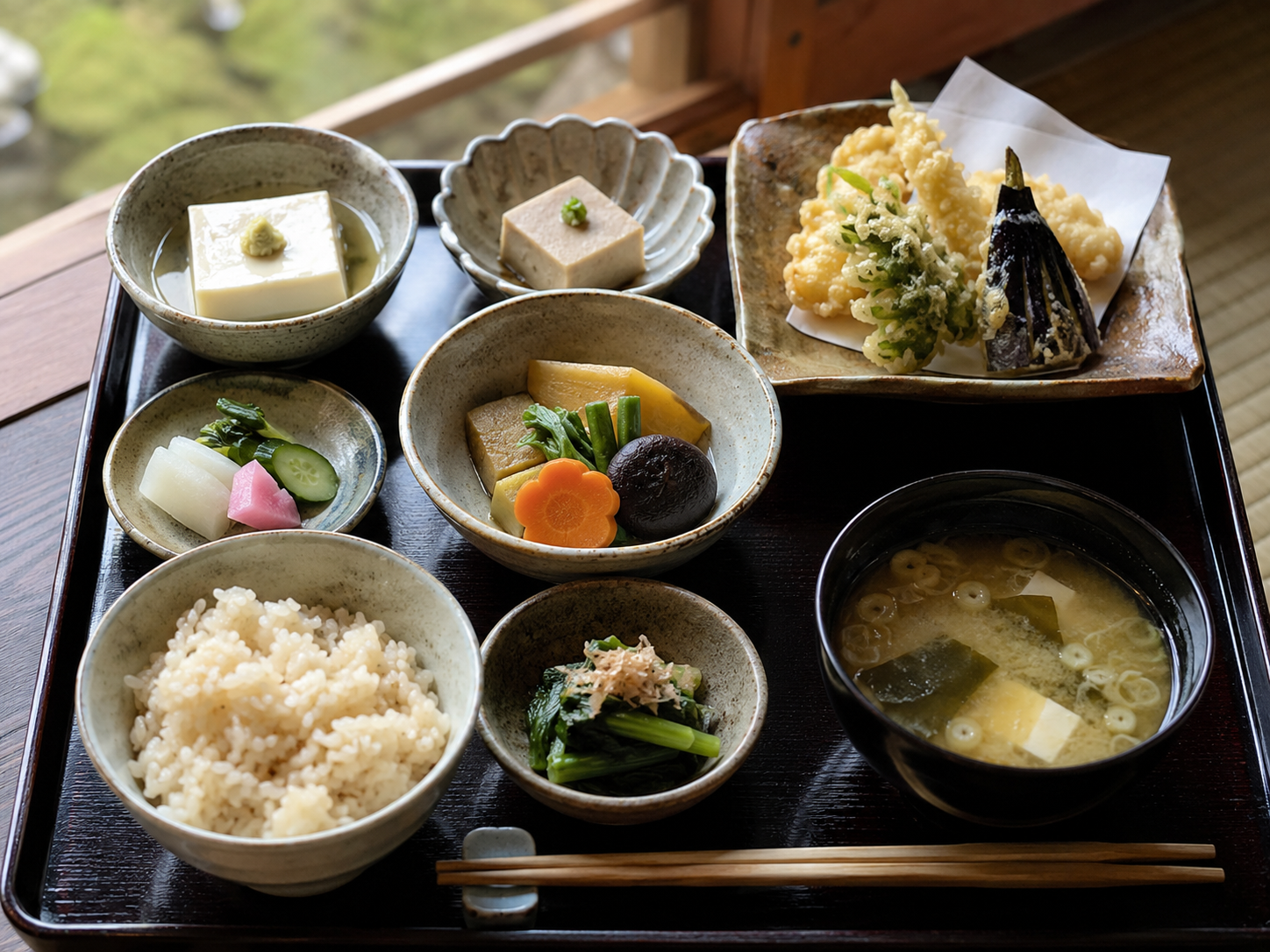
I’m Japanese and married to an Indian, which means I’ve eaten a lot of meals out with my husband’s vegetarian relatives and friends. One that stuck with me was a week-long visit from one of his uncles, a strict lacto-vegetarian. He ended up living mostly on fruit and the ready-to-eat food he’d packed from home. He was too polite to complain, but you could tell he felt left out at meals — and honestly, with a little planning, none of that needed to happen.
Because here’s the other half of the truth: Japan is one of the easiest countries in the world to eat plant-based if you know where to look. It invented an entire 100% plant-based cuisine centuries ago (more on that below), tofu here is extraordinary, and the big cities now have dedicated vegan ramen shops. This guide is the practical version — what to say, what to buy at a convenience store at 11pm, which dishes hide fish, and where to actually eat — whether you’re visiting for a week, hosting plant-based guests, or settling in.
Vegan, Vegetarian, or Lacto-Vegetarian: Know Your Line First
Before anything else, get clear on your own boundary, because the Japanese words you’ll use are different. “Vegetarian” (ベジタリアン) is widely understood to still allow eggs and dairy. “Vegan” (ヴィーガン/ビーガン) means no animal products at all. If you’re lacto-vegetarian — common among Indian guests — dairy is fine but eggs may or may not be, so spell it out. And the one almost nobody in a Japanese kitchen will anticipate: fish stock. To most cooks here, dashi isn’t “meat or fish,” it’s just… flavor. You have to name it specifically.
- Vegan → no meat, fish, dashi, egg, dairy, honey, gelatin.
- Vegetarian / lacto-ovo → egg and dairy OK; still watch for hidden fish dashi.
- Lacto-vegetarian → dairy OK, no egg; say “tamago mo dame desu” (no egg either).
- Jain → also no onion, garlic, or root vegetables; assume you’ll need to self-cater for strict observance.
Why Eating Vegan or Vegetarian in Japan Can Be a Challenge
Restaurants Carry Few Veg Options
Plant-based eaters are still a small slice of the market. A 2024 survey by Vegewel put vegetarians and vegans at 5.9% of Japanese adults — small, but actually growing (it was up 0.8 points from the previous survey, and nearly 20% now identify as flexitarian, consciously cutting back on meat). The momentum is real; the restaurant scene just hasn’t fully caught up yet (source).
There’s also a cultural quirk: simple plant dishes — simmered vegetables, tofu, beans, miso soup — are seen as everyday home food, almost too plain to put on a restaurant menu. It’s a bit like green tea, which rarely appears on menus because it’s just assumed. So the vegetables exist everywhere; they’re just not always advertised.
How to handle it: Scout a few well-reviewed vegan-friendly spots before you go using HappyCow or Google Maps, and keep a couple of Japanese phrases ready (below). A little prep turns a stressful meal into an easy one.
Fish Hides in Almost Everything
This is the big one. Dashi — the stock that gives Japanese food its umami — is the cornerstone of the cuisine, and it’s most often made from katsuobushi (bonito flakes) or niboshi (dried sardines). It turns up in miso soup, dipping sauces, simmered dishes, savory pancakes, and plenty of things that otherwise look entirely vegetable. A “vegetable tempura” set can arrive with a fish-based dipping sauce; plain-looking spinach (ohitashi) is often dressed with bonito.
How to handle it: Learn the words for it and ask. The good news is that fully plant-based dashi made from kombu (kelp) and dried shiitake is traditional, delicious, and sold in every supermarket — so vegan versions of these dishes absolutely exist, especially in temple cuisine.
Hidden Animal Ingredients Are Hard to Spot
Japanese meals tend to combine many small ingredients, which makes animal-derived ones easy to miss. These are the ones worth memorizing — both the Japanese script and the sound, so you can recognize them on a label or a menu:
- 出汁 / だし (dashi) — stock, usually fish-based.
- かつお節 (katsuobushi) — bonito flakes.
- 煮干し (niboshi) — dried sardines.
- 魚醤 (gyoshō) — fish sauce.
- ゼラチン (gelatin) — common in jellies, mousses, and gummies.
- ブイヨン (bouillon) — often chicken or beef based.
Western Substitutes Can Be Hard to Find
If you cook at home, you may struggle to find vegan cheese or familiar meat alternatives outside big-city import stores. That’s because Japan never needed them — it built its protein around soy centuries ago. Lean into that instead of fighting it: tofu, natto, abura-age (fried tofu), and ganmodoki (tofu fritters) are cheap, everywhere, and genuinely good. (That said, soy-based meat — daizu mīto — has landed in regular supermarkets and konbini in the last few years, so the gap is closing fast.)
Your Survival Toolkit: Phrases, Konbini, and a Card to Show
Phrases That Actually Work
You don’t need to speak Japanese — you need about five sentences. Staff here are generally helpful and will check the kitchen if you ask politely. The make-or-break one is the dashi question, because “no meat or fish” alone won’t catch the stock.
- “Niku to sakana wa tabemasen.” — I don’t eat meat or fish.
- “Sakana no dashi wa haitte imasu ka?” — Does it contain fish stock?
- “Tamago to nyūseihin mo dame desu.” — No egg or dairy either. (Drop this if you’re lacto-vegetarian.)
- “Yasai dake no menyū wa arimasu ka?” — Do you have any vegetables-only dishes?
- “Kombu dashi nara daijōbu desu.” — Kelp stock is fine.
When speaking fails, Google Translate’s camera mode reads menus on the spot. One caveat: many chain restaurants won’t customize orders, so for them it’s check-the-menu-first rather than ask-the-kitchen.
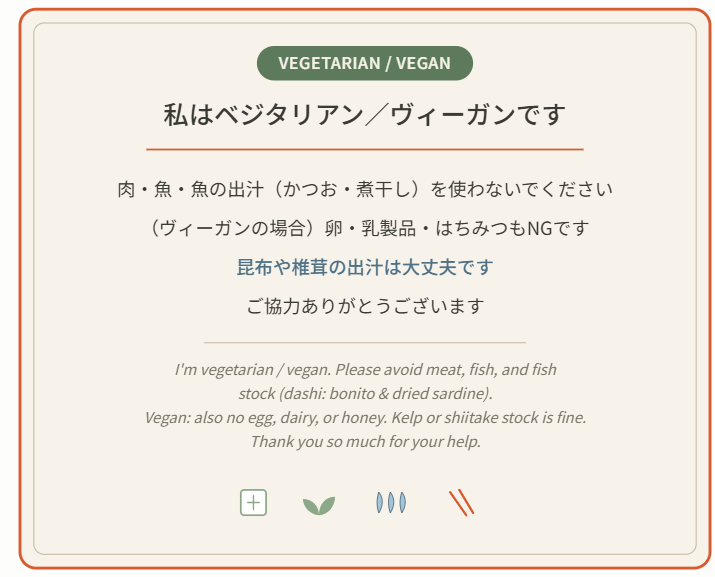
A Card You Can Screenshot and Show
This is the single most useful thing in this article. Screenshot it (or save the image version below) and hand your phone to the staff. Delete the lines that don’t apply to you.
Convenience Stores: Your 24-Hour Backup
When you strike out at restaurants, the konbini (7-Eleven, Lawson, FamilyMart) will save you — they’re on every corner and open all night. Reliable plant-based picks:
- Onigiri — stick to umeboshi (pickled plum), kombu (kelp), or yaki-onigiri without bonito. Avoid tuna-mayo and the “konbu” ones that list dashi.
- Edamame, plain salads, cut fruit, roasted nuts — easy wins (bring or ask for non-creamy dressing).
- Soy milk, soy-protein bars, inari-zushi (sweet rice in fried tofu pouches — usually vegan).
- Lawson’s “Daizu Labo” soy-meat range and FamilyMart’s soy snacks — a recent and welcome addition.
- Plain steamed buns, mochi, dorayaki — check for egg/honey if vegan.
One honest warning: konbini packaged food lists ingredients in Japanese only, and dashi sneaks into things like the broth of oden or the seasoning on “vegetable” side dishes. When in doubt, the camera translator is your friend.
The Vegan Side of Traditional Japan
Japan Runs on Soy Protein
Long before “plant-based” was a marketing term, Japan was building entire meals around soy. These four are cheap, sold in every supermarket, and the backbone of easy home cooking here:
- Tofu — silky or firm, it carries soups, stir-fries, and salads.
- Natto — fermented soybeans, pungent and an acquired taste, but a nutritional powerhouse and a great protein source.
- Abura-age & Atsu-age — thin and thick fried tofu. Slit an abura-age open and it makes a surprisingly good mini pizza base.
- Ganmodoki — tofu-and-vegetable fritters. They soak up broth beautifully, so simmer them in a well-seasoned soup.
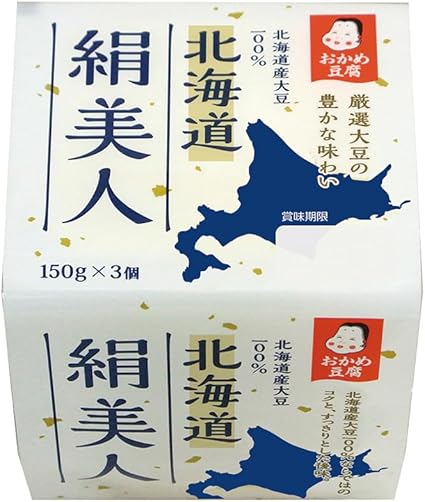
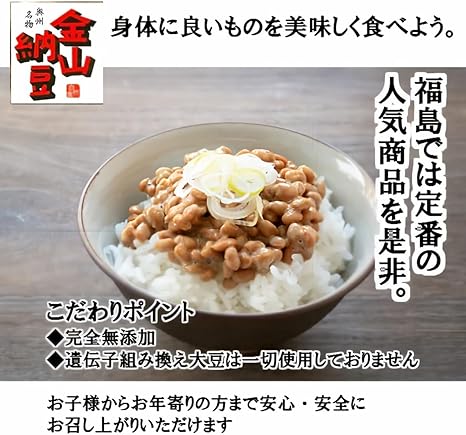
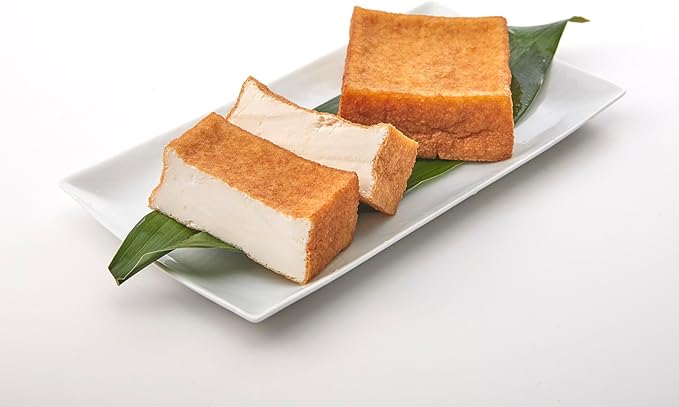
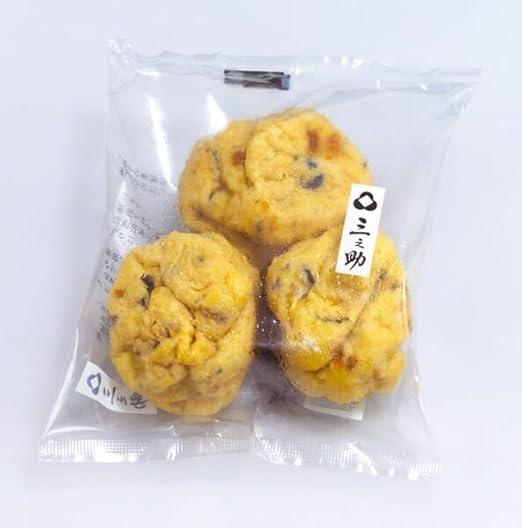
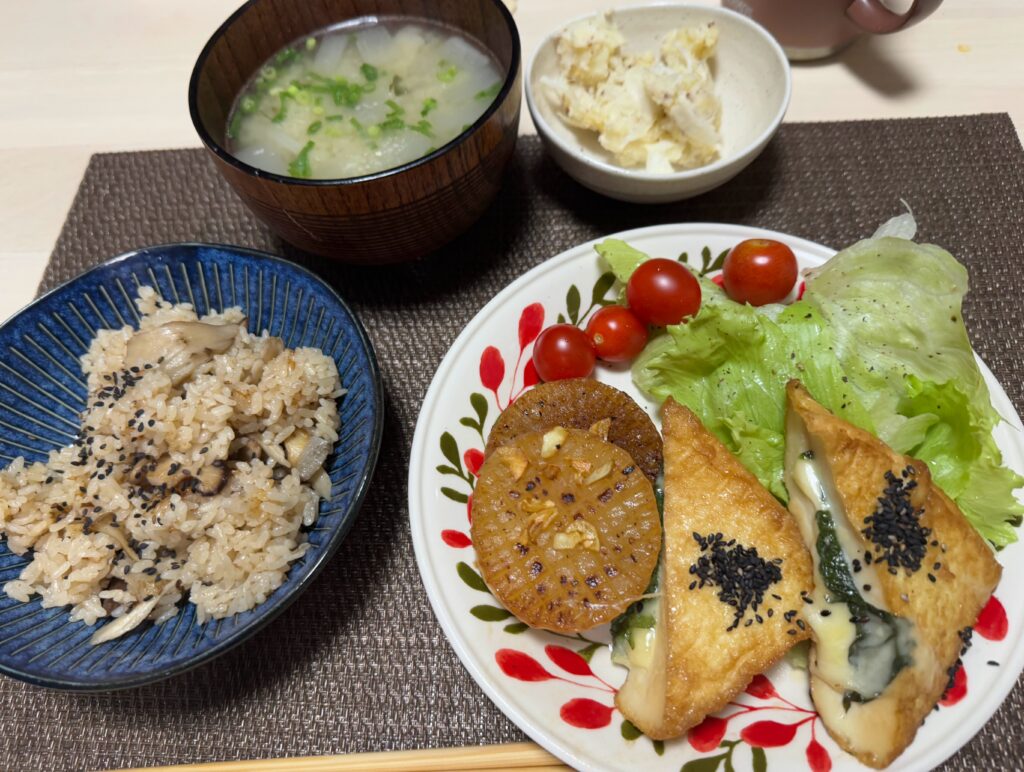
Here’s a five-minute dinner I make for lacto-vegetarian guests: grill a block of atsu-age, stuff it with melting cheese, and glaze it with soy sauce, sake, and a pinch of sugar. Serve it with rice and miso soup (kombu dashi) and nobody feels like they’re missing out.
Shojin Ryori: Japan’s Original Vegan Cuisine
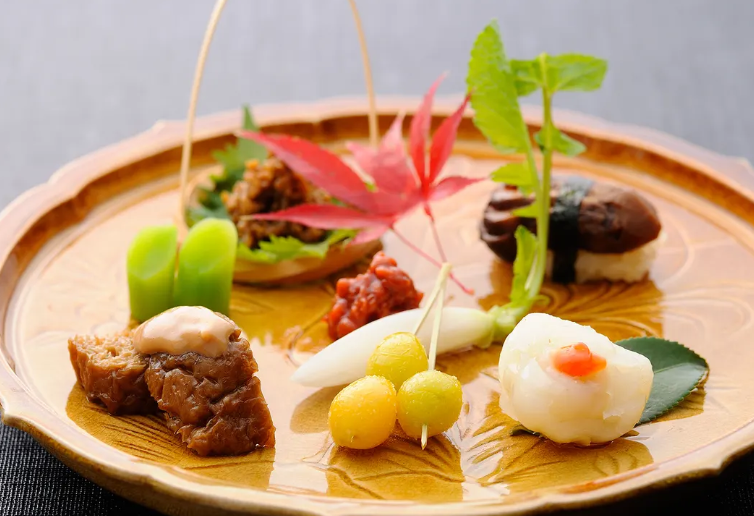
If you try one thing on this list, make it shojin ryori — the temple cooking of Japan’s Buddhist monks, refined over centuries. It’s the rare case where “100% plant-based” isn’t a modern compromise but the whole point, rooted in Zen ideas of simplicity, seasonality, and not wasting a scrap.
- Fully plant-based — no meat, fish, or fish dashi; built on tofu, vegetables, sea vegetables, and miso.
- Quietly satisfying — think sesame tofu, vegetable tempura, and soups built on kombu and shiitake stock.
- An experience, not just a meal — often served in a temple in Kyoto or Nara, sometimes in a tatami room overlooking a garden.
You’ll also find it at the high end. Daigo in Tokyo, the best-known shojin restaurant in the country, currently holds one Michelin star plus a Michelin Green Star for sustainability (it carried two stars for years through 2023, so older guides may say otherwise). For something gentler on the wallet, Seigetsu-an in Oita serves Michelin-recognized shojin ryori inside Kensho-ji Temple, cooked by the temple’s own head priest — a genuine hidden gem.
Everyday Dishes You Can Make Vegan
Even at an ordinary restaurant, a few classics work with small tweaks:
- Vegetable tempura — usually vegan in the batter, but confirm the dipping sauce (tentsuyu) is dashi-free, or just use salt.
- Veggie sushi — cucumber (kappa), pickled plum, pickled radish, avocado rolls. Light on protein, so pair with agedashi-dofu (fried tofu) — just check that broth for dashi too.
- Zaru soba — cold buckwheat noodles; ask for the dipping sauce on the side and confirm it’s kombu-based, or dress them simply.
- Yu-dofu — hot tofu simmered in kombu broth, a Kyoto specialty and almost always vegan.
If you want the full picture of what’s worth eating in Japan (and what to skip), our guide to Japanese food experiences covers the broader scene, while the everyday etiquette in our practical Japan travel tips helps you order with confidence.
Where to Eat: Vegan Restaurants in Tokyo
Tokyo’s plant-based scene has quietly become one of the best in Asia, from temple-cuisine institutions to West Coast-style cafés. Hours and locations shift, so confirm each on HappyCow or Google Maps before you go — but these are reliable starting points:
- T’s TanTan (Tokyo Station) — creamy, spicy vegan ramen right inside the station’s Keiyo Street concourse. The single easiest vegan meal in Tokyo if you’re passing through.
- Ain Soph (Ginza, Shinjuku, Ikebukuro) — a mini-chain of comfort food: fluffy pancakes, hearty burgers, indulgent desserts. Each branch has its own menu.
- Vegan Ramen UZU — rich, modern 100% vegan ramen from the teamLab team.
- Mr. Farmer (Omotesando, Shinjuku and more) — bright American-style café with big salads, loco moco bowls, and burgers; easy for mixed groups.
- Nataraj (Ginza, Ogikubo) — Indian, lacto-vegetarian-friendly, with dairy curries, naan, and rice; a relief for vegetarian guests from South Asia.
- Bon (Iriya/Asakusa) — refined shojin ryori in private rooms, running for 70-plus years; once hosted John Lennon.
- Komaki Shokudo (Akihabara, in mAAch ecute) — shojin-inspired set meals; the chef grew up in a temple, so it’s the real thing made casual.
- Alaska Zwei, Nedzunoya, .RAW, +Veganique, Loca Kitchen, Sasaya Cafe, Minoya — a deep bench of cafés and specialists, from raw-vegan to organic to historic (Sasaya started as a sweets maker in 1782).
Where to Eat: Vegan Restaurants in Kyoto
Kyoto is arguably the best city in Japan for plant-based eating — it’s the home of both shojin ryori and yu-dofu, and it pairs perfectly with a temple-heavy itinerary (see our guide to the best places to visit in Japan by region for where these sit). Modern cafés:
- Vegans Café and Restaurant (near Fushimi Inari) — vegan ramen and donburi a short ride from the famous red gates; ideal after the climb.
- Mumokuteki Café (downtown/Teramachi) — sustainability-minded café known for vegan katsu and ramen.
- Miyako Yasai Kamo — all-you-can-eat Kyoto vegetables; locals queue for it.
- Choice, Hare, Da Maeda — a doctor-designed gluten-free menu, elegant Japanese-style yuba (tofu skin) dishes, and vegan Italian in a machiya townhouse, respectively.
For temple-set shojin ryori in Kyoto, three stand out: Shigetsu inside Tenryu-ji Temple (Arashiyama), Sagano for yu-dofu nearby, and Seigen-in within Ryoan-ji, where you eat overlooking the famous rock garden.
Frequently Asked Questions
Is it hard to be vegan or vegetarian in Japan?
Harder than in, say, India or California, but much easier than its reputation suggests — especially in Tokyo and Kyoto. The main trap is hidden fish stock (dashi), not a lack of vegetables. With a translation app, a screenshot card, and konbini as backup, most travelers eat well without much stress.
Does Japanese food really use fish in everything?
Not everything, but more than you’d expect. Dashi made from bonito or sardines flavors miso soup, many simmered vegetable dishes, dipping sauces, and broths. Always ask “sakana no dashi wa haitte imasu ka?” Kombu (kelp) and shiitake dashi are common vegan alternatives, especially in temple cuisine.
What can vegans buy at a Japanese convenience store?
Plain onigiri (umeboshi or kombu), inari-zushi, edamame, cut fruit, roasted nuts, soy milk, soy-protein bars, and increasingly soy-meat products like Lawson’s Daizu Labo range. Check labels with a camera translator, since dashi can hide in “vegetable” side dishes.
Is miso soup vegetarian?
Usually not, because standard miso soup is made with bonito or sardine dashi. The vegan version uses kombu or shiitake stock and is easy to make at home or to find at shojin ryori and many vegan restaurants — just ask before assuming.
What is shojin ryori?
It’s the 100% plant-based Buddhist temple cuisine of Japan, centered on tofu, seasonal vegetables, and kombu/shiitake dashi. You can try it at temples and dedicated restaurants in Kyoto, Nara, and Tokyo — it’s the most authentic and culturally rich vegan meal in the country.
The Bottom Line
Eating plant-based in Japan isn’t about scarcity — it’s about knowing the local logic. Name the fish stock, lean into soy, keep a screenshot card and a few konbini staples in reserve, and seek out shojin ryori at least once. Do that and Japan stops being the country where vegetarians live on packed fruit, and becomes one of the most interesting plant-based food cultures you’ll ever eat your way through. My husband’s uncle, for the record, came back a few years later — and that time we ate very well.




2 thoughts on “Japan for Vegans and Vegetarians: A Practical Survival Guide (2026)”