Japanese etiquette has a reputation for being endless and intimidating—a hundred little rules waiting to trip you up. Here’s the reassuring secret: it almost all flows from a single idea. Be considerate of the people around you, and don’t cause them trouble (meiwaku). Internalize that one principle and most “rules” become obvious, because they’re just specific expressions of it. You won’t get everything right, and that’s fine—nobody expects a newcomer to. But understanding the why will take you further than memorizing any checklist.
I write this as a Japanese person married to a foreigner, so I’ve watched these unspoken rules from both sides—the things locals never think to explain, and the things that genuinely surprise someone who didn’t grow up here. Let’s walk through the ones that matter most, roughly in the order you’ll bump into them.
Out in Public: Moving Through the City
On the streets: go with the flow
On a busy street, especially at rush hour, there’s an invisible current to the foot traffic. A considerate pedestrian doesn’t fight it. Merge into the flow heading your way, and avoid sudden stops—if you halt without warning, the person behind you has to swerve. When you need to change direction, drift toward the edge rather than making a sharp 90-degree turn. Do this and you’ll glide through the crowd without ever bumping anyone, which is the whole point.
On escalators: stand on the left (mostly)
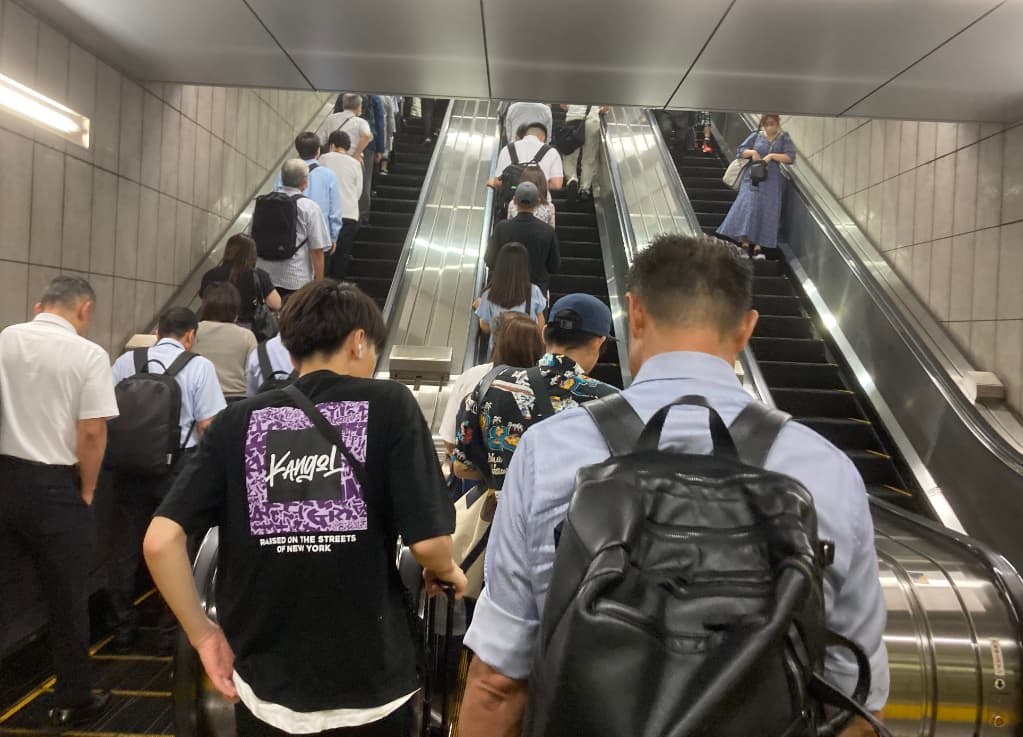
In most of Japan, you stand on the left of the escalator and leave the right side open for people who want to walk up. In Osaka and much of the Kansai region, it’s flipped—stand on the right. This is still the everyday convention you’ll see, and following it is the easy way to not be in anyone’s way.
One update worth knowing: for safety reasons, railway companies and a few local governments (Saitama in 2021, Nagoya in 2023) now run campaigns asking everyone to stand still on both sides and not walk at all. There’s no penalty, and in practice the stand-on-one-side habit is alive and well. So if you simply stand still, you’re never wrong.
Honestly, I have a soft spot for the existing custom. It lets two kinds of people coexist—those who want to rest on the way up, and those in a hurry—each choosing their own pace. Even if the group moves a little slower overall, a norm that lets the individual pick their own style feels, to me, more respectful of the person than forcing everyone into the same mold. Make of that what you will; either way, standing is always safe.
On the platform: fall in line
Waiting for a train, you’ll notice people standing in oddly precise formations. Look at the floor: there are marks showing exactly where each set of doors will stop, and people form two neat lines on either side of that spot. Join a line. When the train arrives, let everyone off before you board—standing aside for exiting passengers is non-negotiable here.
Don’t eat (or text) while walking
Eating while walking is mildly frowned upon—you’ll see people stand to the side near a convenience store or vending machine to finish a drink or a snack before moving on. Walking while staring at your phone (aruki-sumaho) is also discouraged and, in some areas, signposted against. Neither will get you arrested, but both read as a little oblivious to the people around you.
Japan Runs Quiet
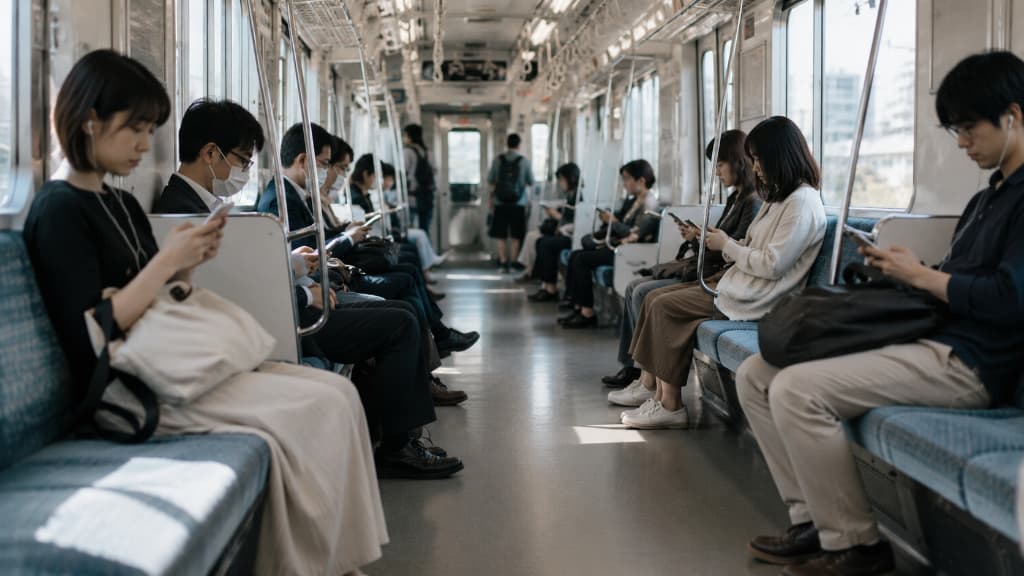
If there’s one thing that surprises newcomers most, it’s the volume—or lack of it—in shared spaces. On trains especially, phones go on silent (called “manner mode”), people don’t take voice calls, and conversation stays low. It’s not that Japanese people are unfriendly; quiet is simply the default way of not imposing on strangers in a packed space.

If my phone rings on the train, can I answer?
Quietly say “I’m on the train, I’ll call you back,” and hang up. Quick chatting in a low voice is fine when it’s not crowded—just read the room.

This is the rule my husband finds hardest, and I love him for it. He talks more loudly than he realizes, and on the train I’ll quietly signal him to bring it down a notch. Where he’s from, a lively volume is just warmth and friendliness, and the idea that noise itself could bother a stranger was genuinely new to him. Same with taking calls on speakerphone out on the street or the balcony—completely normal in much of the world, but in Japan it’ll earn you a few cold glances. None of this is about being uptight; the sense of “loud equals inconsiderate” simply runs deep here, and once you feel it, you’ll start noticing the quiet too.
Trash, Cleanliness, and Leaving No Trace
Finished your drink and can’t find a bin? Welcome to Japan, where public trash cans are weirdly scarce. Many were removed from stations after the 1995 subway attack for security reasons, and a fresh wave of removals swept the major railways in 2021–2022; convenience stores have moved their bins inside, too. The upside is streets that are remarkably clean. The catch is you’ll often be carrying your rubbish for a while.
So the move is simple: don’t litter—carry it home. I keep a small bag in my pocket or tote for exactly this; an empty bottle or a snack wrapper rides along until I get home. (The old trick of buying something tiny to score a free plastic bag doesn’t really work anymore, since stores started charging for bags in 2020.) Here, littering isn’t really about the mess. It comes across as a small act of disregard for everyone else, and while no one will scold you to your face, it quietly dents how people see you. It’s technically an offense under the Waste Management Law too, though that’s rarely enforced for a stray bottle.
The same instinct shows up everywhere: leave a space as you found it, or cleaner. At a self-service café like Starbucks, bus your own cup and tray to the return counter, and wipe a small spill with a napkin (for a big one, staff will help). Leaving a mess is a quiet shame; leaving things tidier than you found them is quietly admired. For how Japan’s famously detailed household garbage sorting works, see our guide to waste disposal and recycling.
Take Your Shoes Off
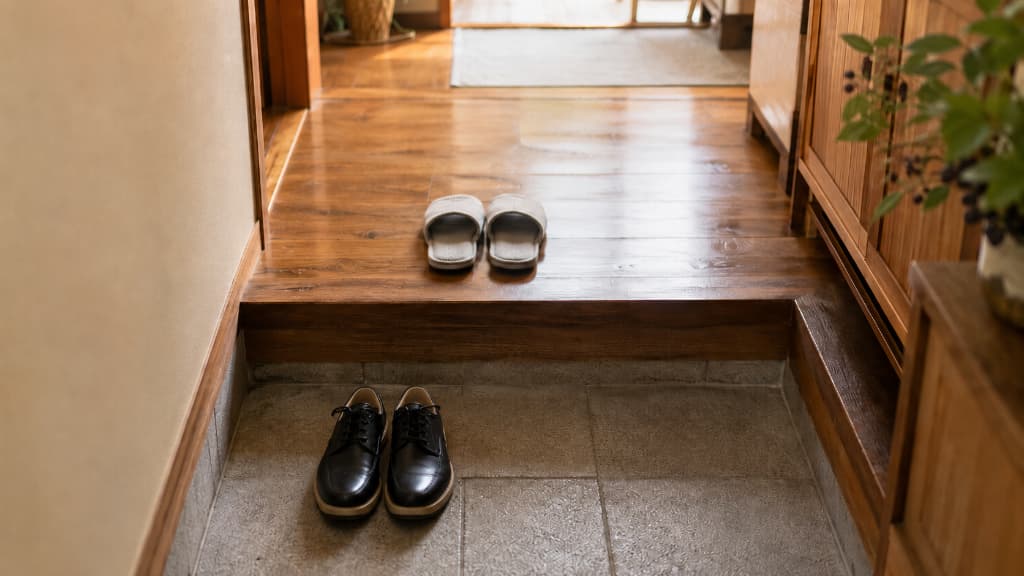
This one catches almost everyone at first. You remove your shoes when entering a home, and also many traditional restaurants, ryokan, temples, clinics, and schools. The cue is the genkan—a recessed entry area, often a step down, where outdoor shoes come off. Leave your shoes pointing toward the door, step up onto the raised floor, and switch to the slippers usually provided.
Two things newcomers miss: never step on tatami mats in slippers (socks or bare feet only—slippers come off at the edge of the tatami), and watch for the separate toilet slippers waiting just inside the bathroom door. Swap into them for the toilet, and—this is the classic blunder—remember to swap back out. Walking back into the living room in the toilet slippers is the kind of mistake that becomes a fond family story.
At the Table: Dining and Chopsticks
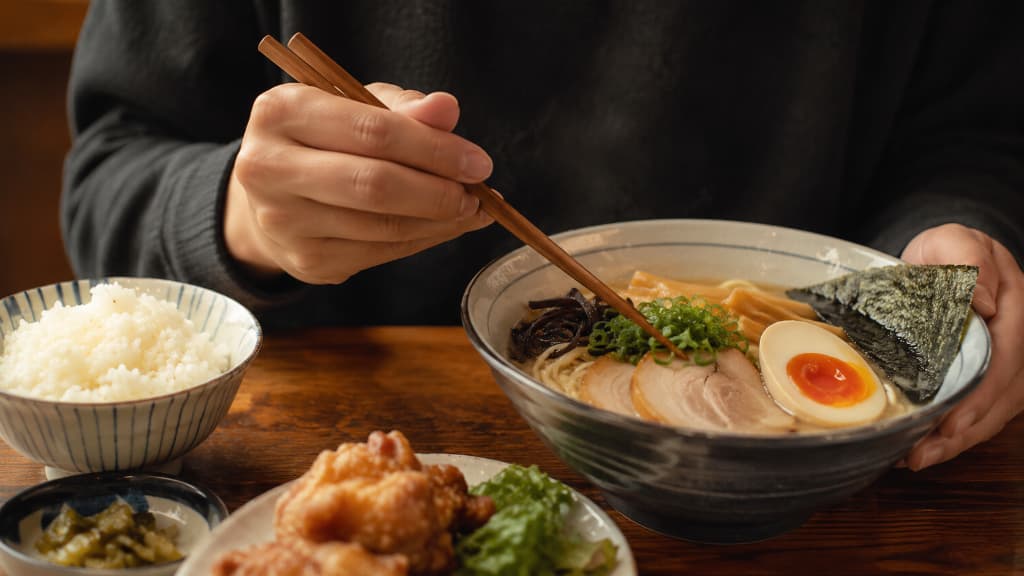
A few table habits go a long way. Say itadakimasu before eating and gochisōsama after—a small thanks for the meal. It’s normal to lift your small rice and miso-soup bowls toward you rather than hunching over them. And yes, slurping noodles is perfectly fine—even appreciated with ramen and soba—so don’t fight the urge.
Chopsticks carry the two etiquette rules worth memorizing, both rooted in funeral symbolism:
- Never stand chopsticks upright in a bowl of rice. It echoes an offering to the dead.
- Never pass food chopstick-to-chopstick with another person. Use a serving plate instead. This too mirrors a funeral ritual.
When sharing dishes, use the serving chopsticks (toribashi) if provided, or flip yours to the clean end. And remember: tipping is not a thing in Japan—it can even cause confusion—so don’t leave money on the table. We cover dining in more depth in Food 101: Tips for Eating Out.
At the Izakaya: Drinking Etiquette
The drinking table has its own small choreography, and it’s worth knowing because so much socializing—work included—happens over a beer. Wait for the group’s kanpai (cheers) before your first sip. And here’s the one that trips everyone up: you don’t pour your own drink. You keep half an eye on the glasses near you, and when someone’s runs low, you top it up, holding the bottle with both hands. Someone will do the same for you—when they pour, lift your glass a little toward them. It feels fiddly at first, but it’s the same old principle as everything else, just pointed at the friends beside you instead of strangers.
Nobody should push you to drink more than you want. Forcing drinks and the old chug-along chants (“ikki! ikki!”) have fallen out of favor, and pressuring people now has a name—aru-hara, “alcohol harassment.” Switching to oolong tea or a soft drink is completely normal. Order what you like, join every toast, and no one worth drinking with will bat an eye.
Here’s the twist my husband never saw coming. These same people who won’t take a phone call on the train, who murmur sumimasen for brushing past you—get a couple of drinks into them and they’ll suddenly ask the blunt, personal questions they’d never raise at the office. How much do you make? When are you two having kids? He found it whiplash-inducing: the most reserved people he’d ever met, abruptly at their least reserved. But that’s part of what the drinking table is for here. The unspoken deal is that what’s said over drinks (a nomikai) mostly stays there—a pressure valve for a culture that keeps a pretty tight lid on things the rest of the time. Roll with it, answer as vaguely as you like, and don’t be shy about lobbing a few nosy questions back.
Onsen and Public Baths
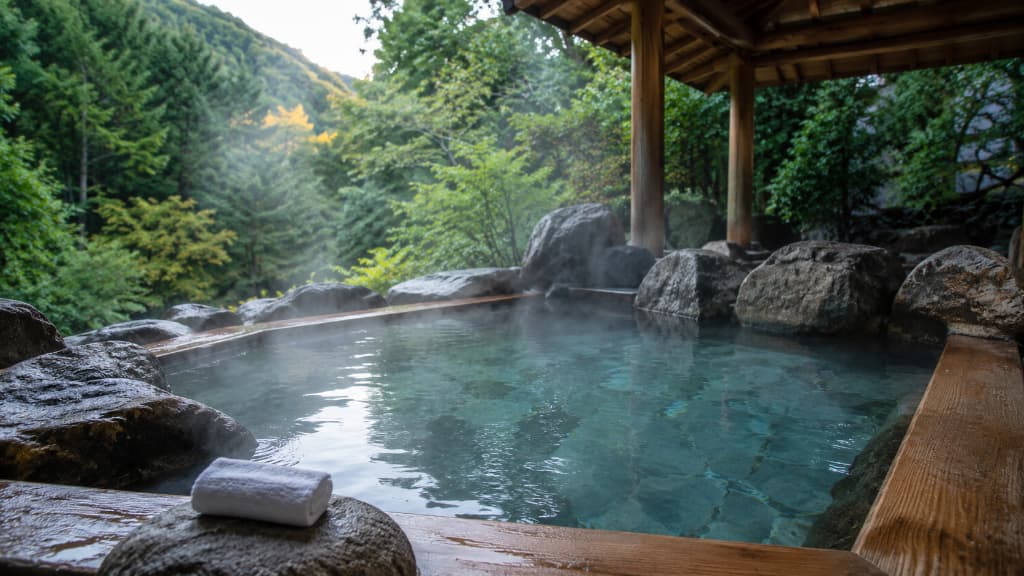
Hot springs (onsen) and public baths (sentō) are a joy, but they have firm rules, and they all come back to keeping the shared water clean. You bathe naked (no swimwear), and you wash and rinse your whole body thoroughly at the shower stations before getting into the communal tub—the bath is for soaking, not cleaning. Bring the small towel in with you if you like, but don’t let it touch the water; most people fold it on top of their head.
One heads-up that surprises visitors: many onsen still refuse entry to people with tattoos, due to a historical association with organized crime. Attitudes are slowly loosening, and some places offer cover stickers or private baths, but if you have visible ink, it’s worth checking ahead or looking for a tattoo-friendly facility.
The Apology Culture: Why “Sorry” Comes Cheap
This is the one I most want newcomers to understand, because misreading it creates needless friction. In Japan, a quick sumimasen (“sorry/excuse me”) is social lubricant. You say it constantly—for brushing past someone, for taking up a moment of their time, for a tiny mix-up—and crucially, it is not a heavy admission of guilt. It just smooths the gears. An apology here is cheap, frequent, and low-stakes by design.
The flip side is the part that trips people up: when an apology is expected and doesn’t come, its absence reads as a real insult. My husband comes from a culture where people rarely apologize and a “sorry” carries genuine weight—so to him, apologizing for something small felt like conceding he’d done something wrong. He didn’t see why skipping it could offend anyone. But in Japan the math is reversed: a light, prompt apology costs you nothing and dissolves tension instantly, while withholding one where it’s expected creates exactly the conflict you were hoping to avoid. If you take one thing from this article, let it be this—when in doubt, a soft sumimasen is almost never the wrong move.
Punctuality, Bowing, and Everyday Greetings
Punctuality is a real expectation. “Arrive five minutes early” is something Japanese kids hear from elementary school, and in a business setting it’s close to sacred—expect people to show up ahead of time. For a casual meetup with friends, it’s far more relaxed; a few minutes late is no crisis, though a light, breezy apology (“sorry, sorry!”) is a nice touch—see the section above on why it lands well.
A small bow is the default greeting, thank-you, and apology all in one; you don’t need to get the angles right, just a natural nod of the head goes a long way. Add -san to people’s names (never to your own), and in business, treat the business card (meishi) exchange with care: receive it with both hands, take a moment to look at it, and don’t immediately shove it in your pocket.
Gifts and Money
Gift-giving is woven through Japanese life, and a little awareness goes far. When you travel, it’s customary to bring back omiyage—a small regional souvenir, usually individually wrapped sweets—for coworkers or close friends. Visiting someone’s home? Don’t arrive empty-handed; a modest gift (nice sweets, fruit, or something from your home country) is expected, and it’s offered and received with both hands. A soft “it’s just a little something” is the standard, humble way to present it.
Money has its own quiet rules. For celebrations like weddings, cash gifts are given as crisp new bills in a special envelope; for condolences, the opposite—older, un-crisp notes. You won’t be expected to master the envelope etiquette overnight, but knowing that the condition of the bills carries meaning will save you from an awkward moment. And in everyday life, it’s polite to place cash on the small tray at a register rather than handing it directly to the cashier.
Living Here: Neighborhood Etiquette
If you’re settling in rather than visiting, a few residential customs matter more than any of the above. Garbage has to go out sorted correctly and on the right collection day, in the designated bags—getting this wrong is one of the fastest ways to irritate neighbors (again, the waste disposal guide has the details). In apartments, noise carries, so keep footsteps, music, and late-night laundry in check. And a brief greeting to your immediate neighbors when you move in—ideally with a small gift—still goes a surprisingly long way. Our guide to renting an apartment in Japan covers the move-in side.
Japanese Etiquette Do’s and Don’ts: A Quick Reference
If you remember nothing else, this table covers the situations you’ll meet in your first week.
| Do | Don’t |
|---|---|
| Let train passengers off before you board | Take voice calls or talk loudly in shared spaces |
| Keep your phone on silent (“manner mode”) on trains | Eat or stare at your phone while walking |
| Carry your trash home when there’s no bin | Litter, even a small wrapper |
| Take your shoes off at the genkan; switch toilet slippers back out | Wear slippers on tatami |
| Wash thoroughly before getting into an onsen tub | Stand chopsticks upright in rice or pass food chopstick-to-chopstick |
| Pour drinks for others and let them pour for you | Pour your own drink or pressure anyone to keep drinking |
| Place cash on the tray at the register | Tip—it isn’t customary and can confuse |
| Offer a soft sumimasen to smooth things over | Arrive late to anything business-related |
Frequently Asked Questions
What is the most important rule of Japanese etiquette?
Be considerate of others and avoid causing them trouble (meiwaku). Nearly every specific custom—quiet on trains, queueing, cleaning up after yourself—is just a version of that one idea. Internalize it and most situations sort themselves out.
Do I really have to take my shoes off?
Yes—in homes, and in many ryokan, traditional restaurants, temples, clinics, and schools. Look for the genkan (a step-down entry) and a row of slippers as your cue. Never wear slippers on tatami, and switch into the separate toilet slippers in the bathroom (then back out again).
Is it rude to talk on the train in Japan?
Taking voice calls is considered rude; keep your phone on silent. Quiet conversation is fine when the car isn’t packed—just keep your voice low. The principle is simply not imposing on the people sharing the space.
Do I have to pour my own drink at an izakaya?
No—and you generally shouldn’t. The custom is to pour for the people around you and let them pour for you, holding the bottle with both hands. Wait for the group’s kanpai before your first sip, and don’t feel pressured to keep up; switching to a soft drink is completely normal.
Can I go to an onsen if I have tattoos?
Sometimes. Many onsen still bar visible tattoos, though rules are loosening. Look for tattoo-friendly facilities, use cover stickers for small designs, or book a private bath (kashikiri). Always wash thoroughly before entering the communal water, and keep your towel out of the tub.
Should I tip in Japan?
No. Tipping isn’t customary and can cause confusion or even mild offense. Good service is the standard, not something you pay extra for. If you genuinely want to express thanks, words—or a small wrapped gift in some contexts—work better than cash.
The Bottom Line
Don’t try to memorize every rule—you’ll never get them all, and your own background is part of who you are. When you’re unsure, watch what the people around you do and follow along; that single habit covers most situations. The fact that you read this far says you’re the kind of person who wants to fit in respectfully, and honestly, that attitude matters more than any single custom. You’ll do just fine.
Want to go deeper? The Rules of Living in Japan: From Everyday Manners to Ceremonial Rituals is a thorough reference. And if you’re visiting rather than living here, see our practical travel tips for first-timers.




One thought on “Japanese Etiquette: Unspoken Manners and Customs Every Expat Should Know”