Welcome back to Food 101, my plain-English guide to eating well in Japan. Eating out here is one of the real joys of living in this country — you can have a bowl of ramen for ¥900 or a once-in-a-lifetime kaiseki dinner for ¥80,000, and both will be taken equally seriously by the people cooking it. This post is about the practical side: how to actually find a good restaurant, what a meal costs, what happens from the moment you walk in to the moment you pay, and a few places my husband and I send friends to.
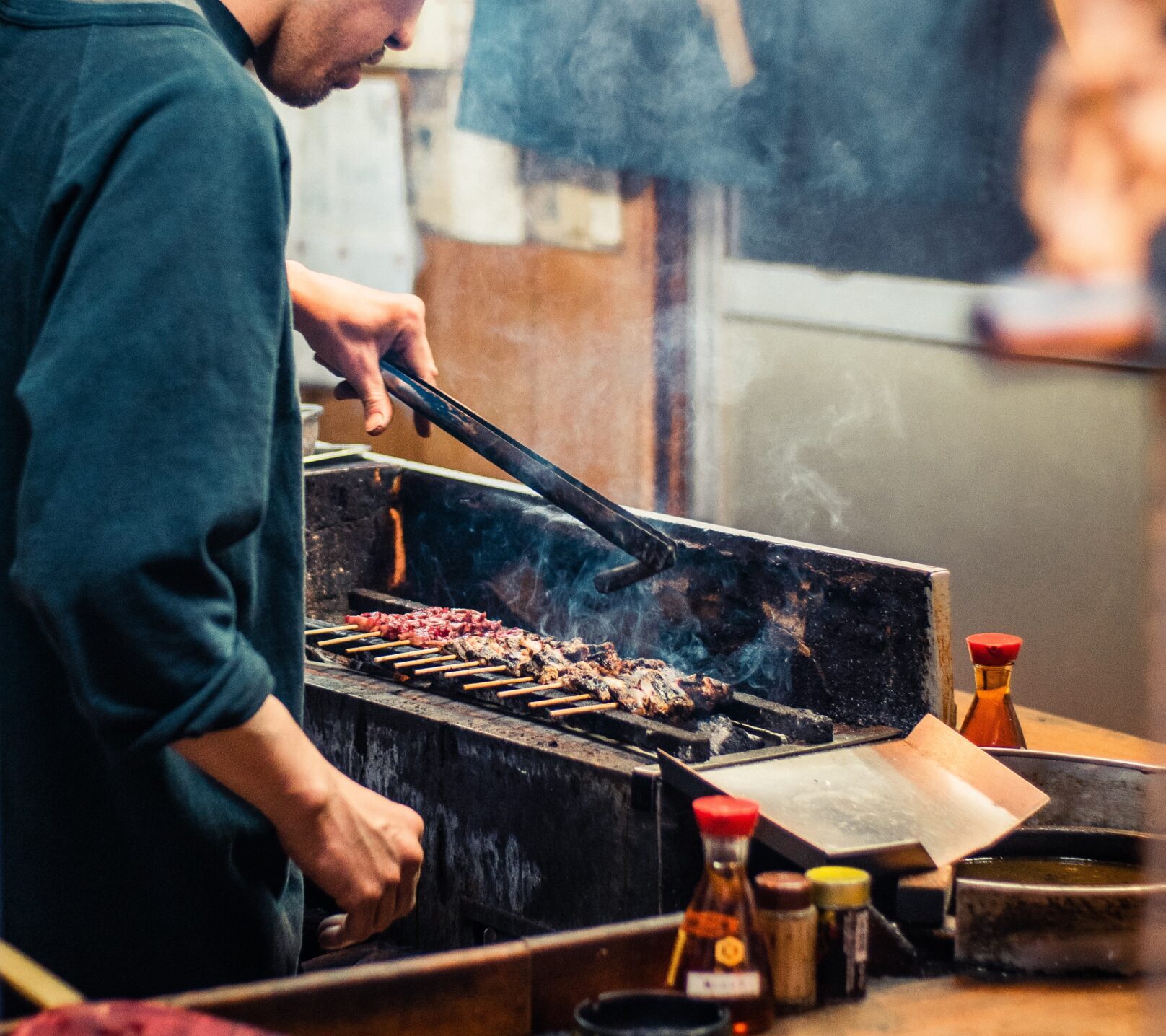
If you’d rather skip the restaurant and eat at home, the other half of this series — Take-Home Meals in Japan (Nakashoku) — covers bento, depachika, and supermarket o-sōzai. Hungry for the food itself? See Japanese Food Experiences: What to Eat & Must-Try Tips.
How to find a good restaurant in Japan
There are more restaurants per square kilometre in Tokyo than almost anywhere on earth, which is wonderful until you’re standing on a corner at 7pm with a hungry partner and no idea where to go. Two apps and one old-fashioned method will get you sorted.
Tabelog
Tabelog is the most-used restaurant review site among Japanese people — think of it as Japan’s Yelp. It launched in 2005 and has collected a huge volume of reviews since, so it’s the default place locals check before booking. There’s an English version of the site, and a paid premium plan unlocks rankings by category, occasion, and area.
The one thing to understand: read the score differently than you would at home. Japanese reviewers are stingy. Anything at 3.5 and above is genuinely good, and a 3.8 is excellent — you’ll rarely see a 4.0. A “3.2” is not a bad restaurant; it’s an average-to-decent one. Judge by the photos and the volume of reviews more than the raw number.
- Best for: credible opening hours and phone numbers, finding places near you, serious foodie research.
- Watch out for: fewer English-language reviews, and a scoring scale that looks low until you recalibrate.
Google Maps
Google Maps has grown into a real rival to Tabelog and is usually my husband’s first stop because the reviews are in English and the navigation gets you to the door. The trade-off is reliability: opening hours and “permanently closed” tags are more often out of date than on Tabelog, so for anything important — a special dinner, a place that takes reservations — cross-check on Tabelog or call ahead.
- Best for: English reviews, photos, and walking directions in the moment.
- Watch out for: stale hours and closure info — don’t fully trust it for a 9pm arrival.
English guidebooks
Apps are great for “I’m hungry right now,” but they’re terrible at telling you why a dish matters or how not to embarrass yourself ordering it. A good English food guide does that, and it’s nice to flip through on the train. Two I’d actually recommend:
- Japan Eats!: An Explorer’s Guide to Japanese Food — an entertaining guide to the pleasures and pitfalls of dining in Japan, with funny, genuinely useful tips you won’t find elsewhere. The one to read before you arrive.
- The Foodie’s Gold List JAPAN Vol.1 — a curated list for when you want to plan something special rather than wing it.
What eating out actually costs
One of the best things about Japan is that “cheap” rarely means “bad.” A ¥900 lunch can be excellent. Here’s a rough map of what to expect per person, food only, before drinks:
| Type of meal | Per person (food) | Examples |
|---|---|---|
| Gyū-don / fast food chains | ¥500–900 | Yoshinoya, Sukiya, McDonald’s |
| Ramen / udon / soba | ¥800–1,300 | Most independent ramen shops |
| Weekday lunch set (teishoku) | ¥1,000–1,800 | Family restaurants, cafés, izakaya lunch |
| Conveyor-belt sushi (kaiten-zushi) | ¥1,500–3,000 | Sushiro, Kura Sushi, Hama Sushi |
| Izakaya dinner (with a few drinks) | ¥3,000–5,000 | Neighbourhood izakaya |
| Mid-range dinner out | ¥4,000–8,000 | Yakiniku, tempura, a nicer izakaya |
| High-end sushi counter / kaiseki | ¥15,000–100,000+ | Reservation-only fine dining |
Lunch is the bargain hour. Many restaurants — including expensive ones — serve a set lunch for a fraction of the dinner price, so a midday meal is the smart way to try a place that would be out of budget at night.
How a meal works, from door to bill
This is the part most guides skip, and it’s exactly where newcomers feel lost. Here’s the typical flow at a casual-to-mid restaurant.
Walking in and being seated
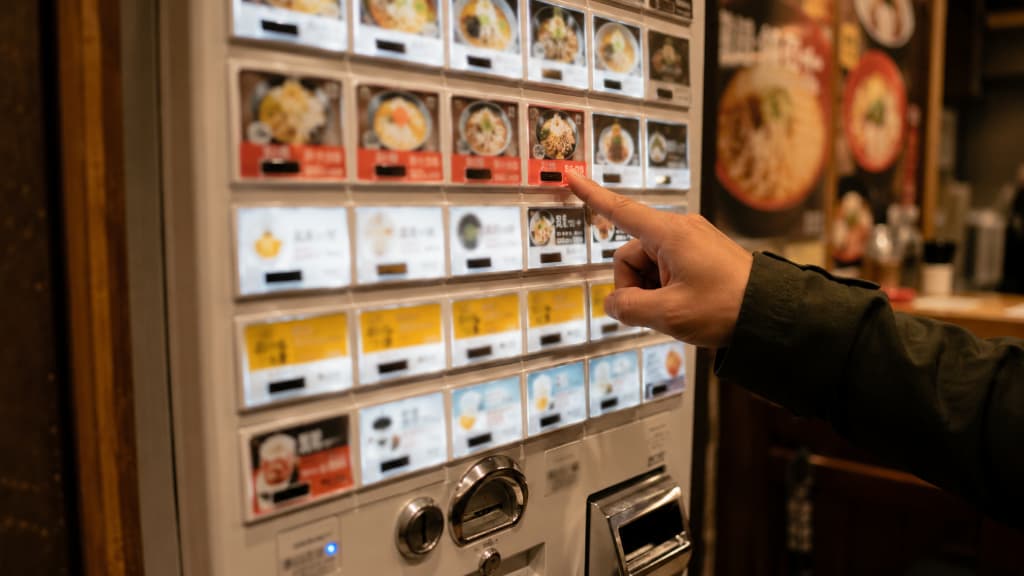
Wait near the entrance — staff will call out “nan-mei sama?” (how many?) and seat you. Don’t seat yourself unless it’s clearly that kind of place. At a ramen or gyū-don shop you may hit a ticket machine (券売機) first: pay, press the picture or button for what you want, and hand the printed ticket to the staff. Many machines now take cards and IC like Suica, but plenty are still cash-only, so keep coins handy.
The “otōshi” surprise — you didn’t order it, but you’re paying for it
At most izakaya (Japanese pubs), a small dish you didn’t order — the otōshi (お通し) — arrives with your first drink. It’s not a free appetiser; it’s effectively a seating/cover charge, usually ¥300–700 per person. Some places also have a one-drink minimum (ワンドリンク制).
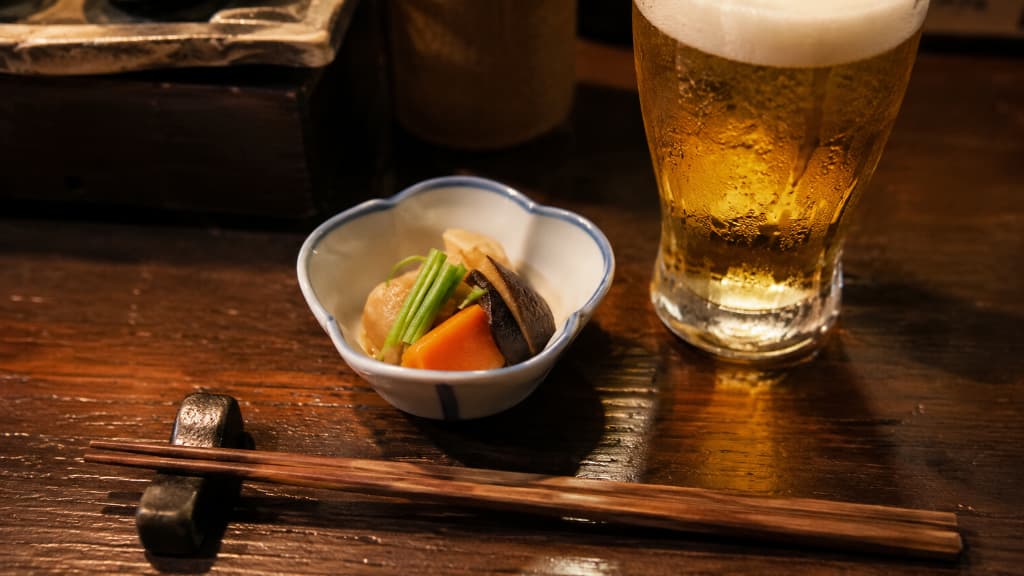
This one genuinely threw my husband the first time. He saw a charge on a Japanese-only bill for something he never asked for and quietly wondered whether the shop was taking advantage of the guy who couldn’t read the menu. “If it had just been written in English,” he said, “I’d have relaxed.” So, for the record: it’s completely normal, every Japanese customer pays it too, and it’s not a scam. Think of it as the price of sitting down at an izakaya.
Getting the staff’s attention
You’re not expected to wait politely to be noticed. Either press the call button on the table (common at izakaya and family restaurants) or say “sumimasen!” across the room — that’s normal and not rude here. Water and often tea are free and refilled without asking.
Paying — usually at the register, often in cash
In most casual places you don’t pay at the table. Take the slip on your table to the register (レジ) by the door and pay there. Cashless has spread a lot, but small independent restaurants can still be cash-only, so always carry some. And — this surprises a lot of people — you never tip (more on that below).
One small thing my husband still appreciates: practically every restaurant, even a tiny ramen counter, has a clean toilet you can use. Coming from places where that’s not guaranteed, he was genuinely surprised — you really can just go.
Dining tips and etiquette
Never tip
Tipping isn’t just unnecessary in Japan — it can come across as awkward or even faintly insulting. Good service is considered standard, not something to be bought with extra cash, and staff will often chase you down the street to return money you “forgot.” If you genuinely want to show appreciation, a sincere “gochisōsama deshita” (thank you for the meal) on your way out means far more than coins on the table. The Japan National Tourism Organization says the same if you want the official line.
Make a reservation for popular places
Heading to a well-known restaurant downtown on a Friday night or a holiday? Reserve. Popular spots fill up and people queue, sometimes for an hour. A reservation skips the line. You can usually cancel up until the day (a course menu may be non-refundable), but a no-show is a real faux pas here — if your plans change, call. Tabelog, Google, and apps like TableCheck handle a lot of English bookings now.
Chopsticks (and the forks are there if you need them)
You won’t be left to eat with your hands — most restaurants have forks and spoons, and no one minds if you ask. If you do want to get comfortable with chopsticks, a couple of rules matter more for etiquette than technique: don’t stick them upright in a bowl of rice, and don’t pass food chopstick-to-chopstick (both echo funeral rituals). Here’s the video I always send people who want to practise.
Special requests and dietary needs
Customizing a dish — swapping ingredients, “sauce on the side,” “no onions” — is far less common here than in the US, and a casual request mid-service may genuinely fluster the staff or simply get a polite “we can’t.” It’s not rudeness on their part; many kitchens prep set dishes and aren’t built to improvise.
If you have a real need, two things help enormously: call a day ahead (Japanese restaurants love to plan, so advance requests are welcomed far more than on-the-spot ones), and be specific about allergies. Vegetarians and vegans should know that hidden dashi (fish stock) and pork are everywhere, even in “vegetable” dishes — we cover how to navigate that in Japan for Vegans and Vegetarians: A Practical Survival Guide.
Smoking, and eating alone
Two things that often catch people off guard. First, smoking: since a 2020 law, indoor smoking is banned in most restaurants, with exceptions for designated smoking rooms and some small, older bars and izakaya. So the days of a smoky dinner are mostly over, but if you’re sensitive, a quick check of the listing (look for 禁煙 = non-smoking) is worth it. Second, eating alone is completely normal here — ramen counters, gyū-don shops, even some restaurants with solo booths are built for it. Nobody will seat you in a corner or treat a table-for-one as odd, which is one of the quiet pleasures of dining in Japan.
Read the plastic food and the curtain
Two more local signals. Many restaurants display eerily realistic plastic food models (sampuru) in the window — they’re not just decoration, they’re an honest preview of portion and price, so point if your Japanese fails you. And a noren, the short fabric curtain hung at the door, is the “open” sign: if it’s out, they’re serving; once it comes down, the kitchen is closed.
Where to eat: our top picks
Rather than send you to a handful of specific addresses that may move or close, here’s how we actually think about it — reliable chains worth knowing, how to choose by craving, and a couple of one-off experiences for when you want a story to tell.
Reliable chains you’ll find almost anywhere
Chains get a bad rap, but Japan’s are a genuine safety net: cheap, consistent, open late, and usually with picture menus.
- Saizeriya — an Italian family restaurant that’s almost suspiciously cheap (pasta and wine for pocket change). It runs on ruthless efficiency and even owns farms in Italy, which is how the prices stay so low. Not fine dining, but great value and very kid-friendly.
- Yoshinoya, Matsuya, Sukiya — the big three gyū-don (stewed-beef rice bowl) chains. Fast, filling, and around ¥500 — the closest thing Japan has to a McDonald’s habit. Order on a ticket machine or touch panel, eat, leave; you can be in and out in ten minutes.
- Mos Burger — if you want a burger, skip the obvious one and try Mos. It’s made-to-order, tuned to Japanese tastes, and tastes different from a Western burger in a good way. There are veggie options too.
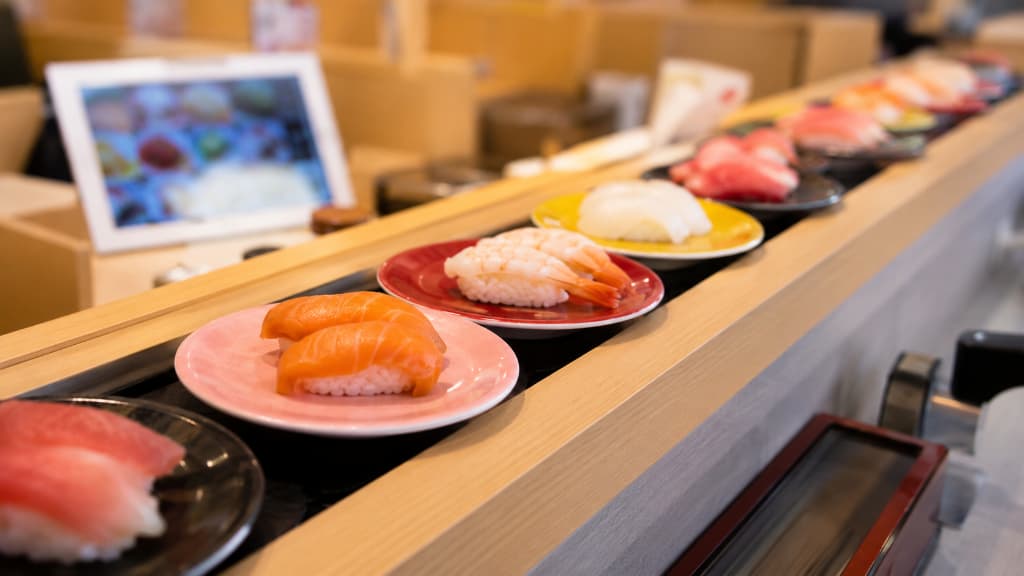
- Sushiro, Kura Sushi, Hama Sushi — conveyor-belt sushi (kaiten-zushi) is the easiest, least intimidating way to eat sushi: order on a touchscreen, plates arrive on a belt or mini bullet train, and dinner for two rarely tops ¥3,000.
Pick by what you’re craving
For independent restaurants, it’s more useful to choose by genre than by a single address. A quick cheat sheet:
- Ramen — look for a shop with a queue of locals and a ticket machine; that combination almost never lets you down.
- Izakaya — the Japanese pub, and my favourite way to eat with a group: lots of small plates, drinks, no rush. Expect an otōshi (see above).
- Sushi — conveyor-belt for casual and cheap; a counter (sushi-ya) for a splurge where the chef serves you piece by piece.
- Yakiniku / shabu-shabu — you grill or simmer the meat yourself at the table; great fun for a group and very foreigner-friendly.
- Soba / udon — a fast, cheap, satisfying lunch; standing soba shops near stations are an institution.
For a special occasion or a story to tell
When you want something memorable rather than everyday, Japan delivers at both the serious and the silly end:
- Top-tier kaiseki — restaurants like Matsukawa in Tokyo are the pinnacle of traditional Japanese cuisine. Fair warning: the very best are introduction-only (you need an existing customer to refer you), cash-only, and can run ¥80,000+ per person. Aspirational more than practical, but worth knowing the tier exists.
- Kappō Yoshiba (Ryōgoku) — chanko-nabe, the hearty hot pot sumo wrestlers eat, served in a former sumo stable with a real ring in the middle of the room. Around ¥8,000–10,000 and a genuinely fun night out.
- NINJA TOKYO — an over-the-top ninja-themed restaurant where staff in costume appear from hidden doors. It’s pure tourist theatre (and it knows it). Note it moved from Akasaka to Ōtemachi in late 2023, so check the current location when you book. Reservation only, roughly ¥10,000–15,000.
Frequently asked questions
Do I need to tip at restaurants in Japan?
No. Tipping is not customary and can be awkward or confusing for staff. The price you see is the price you pay (tax included). Say “gochisōsama deshita” instead.
What is the otōshi charge I see on my bill?
It’s a small dish (otōshi / お通し) served at most izakaya that works as a seating or cover charge, usually ¥300–700 per person. It’s normal and applies to everyone — not a tourist scam.
Do Japanese restaurants accept credit cards?
Many do, and IC cards like Suica and QR payments are widespread, but small independent shops and some ramen places remain cash-only. Always carry some cash just in case.
Can I find vegetarian or halal food when eating out?
Yes, but it takes effort — fish stock (dashi) and pork hide in many dishes. Call ahead, use a translation app for ingredients, and see our vegetarian and vegan survival guide.
How do I get the waiter’s attention?
Press the call button on your table if there is one, or simply call out “sumimasen!” It’s completely normal and not considered rude.
The bottom line
Eating out in Japan is cheaper, more consistent, and less stressful than newcomers fear — once you know the small rules. Carry cash, don’t tip, expect an otōshi at the izakaya, and let the photos on Tabelog do the deciding. When you’d rather eat in, head to the companion piece, Food 101: Take-Home Meals in Japan (Nakashoku), for everything you can pick up and carry home.



3 thoughts on “Eating Out in Japan: Tips, Etiquette & Our Top Picks (2026)”