In Japan, doctors prescribe and pharmacies dispense, and those are two separate buildings. You leave the clinic with a paper prescription (処方箋, shohōsen) and walk it over to an outside pharmacy (薬局, yakkyoku)—usually the one right next door. The system is easy once you know it, but two things trip up newcomers every time: the prescription is only valid for 4 days, and you normally can’t refill it the way you might back home. Here’s how it actually works.
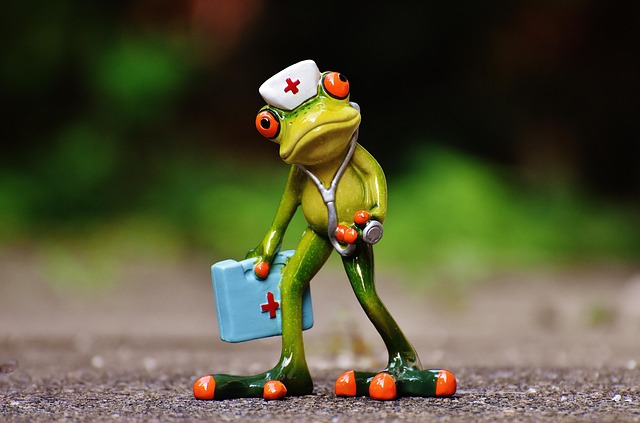
How prescriptions work in Japan: doctors prescribe, pharmacies dispense
Japan separates the two jobs on purpose. The clinic or hospital writes the prescription; a licensed pharmacist at a separate yakkyoku checks it for drug interactions, duplicate ingredients, and allergies, then explains how to take everything. The idea is to add a second set of eyes before the medicine reaches you, and it also keeps clinic wait times shorter because no one’s lining up at the doctor’s office for pills.
In practice this means one extra stop. You’ll see clusters of pharmacies around any clinic or hospital—the green-and-white 調剤薬局 (chōzai yakkyoku, dispensing pharmacy) sign is the one you want. A few large hospitals dispense in-house, but assume you’ll be sent outside. Bring your health insurance card (or My Number card set up for insurance); the pharmacy needs it to bill your coverage, the same as the clinic did.
The 4-day validity rule (and what happens if you miss it)
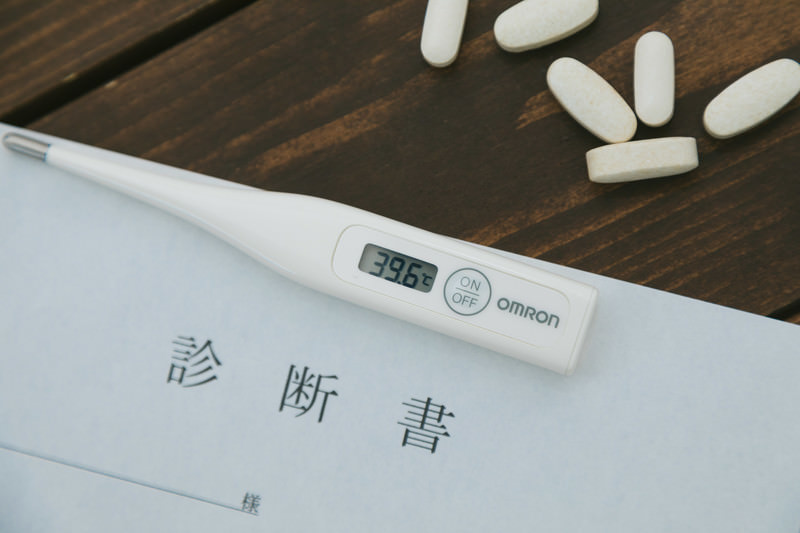
A standard prescription is valid for 4 days including the day it was issued. This isn’t a soft guideline—it’s set by national insurance regulations, and pharmacies enforce it. The clock counts calendar days, not business days, so weekends and public holidays are included. If your doctor sees you on a Friday, you’ve effectively got until Monday.
Why so short? The reasoning is medical: the longer the gap between your exam and filling the prescription, the more likely your condition—and the right medicine for it—has changed. Four days is treated as enough time to get to a pharmacy even across a weekend, while still keeping the prescription tied to a recent diagnosis.
The trap to watch for: a holiday Monday. A prescription handed to you on Friday still expires after four calendar days, so if Monday is a national holiday and your pharmacy is closed Sunday and Monday, your real window can shrink to Friday and Saturday. When in doubt, just fill it the same day as your appointment.
If you genuinely can’t make it in time—say, you’re traveling—ask the clinic before the deadline. In special cases a doctor can write a longer validity period directly on the form, and pharmacies will honor whatever is printed there. What you can’t do is show up on day five and expect the pharmacy to bend the rule.
If it has already expired, there’s no renewing it at the pharmacy. The standard fix is to go back to the clinic for a quick re-issue, which usually means another consultation—and another consultation fee. It’s not the end of the world, but it’s an avoidable cost, so treat that 4-day window seriously.
Refill prescriptions in Japan: the exception, not the rule
Here’s the part that surprises a lot of expats: in Japan, a prescription is normally single-use. There’s no “3 refills” line like on a US bottle. For most ongoing medication, the default is that you see the doctor again each time you need more. If you’re used to picking up refills for months without a visit, this feels like a step backward at first.
The exception is the refill prescription (リフィル処方箋, refiru shohōsen), introduced in April 2022. For patients with a stable, long-term condition, a doctor can mark a prescription as repeatable so you reuse it at the pharmacy without going back for each fill. The key limits:
- The doctor decides whether a refill is appropriate—you can’t request one as a default.
- The total number of uses is capped at 3.
- Some medicines are excluded entirely: newly approved drugs, narcotics and psychotropics, and medicated patches (湿布, shippu).
- The pharmacist records each fill and watches the timing, so try to return within the expected interval.
So if you take regular medication for something like blood pressure, it’s worth asking your doctor, “Is a refill prescription possible for this?” Worst case, the answer is no and you keep booking appointments. Here’s the quick comparison:
| Regular prescription | Refill prescription (リフィル) | |
|---|---|---|
| Reuse | Single use | Up to 3 fills total |
| Who qualifies | Anyone, any prescribed med | Stable, long-term conditions only |
| Validity per fill | 4 days from issue | 4 days from each eligible fill window |
| Excluded meds | — | New drugs, narcotics, psychotropics, patches |
| Doctor visit each time? | Yes | No, within the repeat limit |
What to expect at the pharmacy: the step-by-step flow
The first visit feels like a lot of small steps, but it’s the same routine every time after that.
- Hand over your paper prescription at reception, along with your insurance card. If you have a medication notebook (more on that below), you hand that over too. First-timers fill out a short questionnaire about allergies, current medicines, and pregnancy.
- The pharmacist checks everything—interactions, duplicate ingredients, allergy risks, and whether the dosing makes sense—then prepares your medicine, counting out the exact sheets or packets.
- You get a short explanation (服薬指導, fukuyaku shidō): what each medicine is, how and when to take it, and what to watch for. This is your moment to ask questions.
- You pay (cash always works; many pharmacies now take cards and IC/QR payments) and leave with your medicine and a printed information sheet.
How long does it take? For a simple prescription, often around 10–15 minutes. It can stretch past 30 on busy mornings, right after nearby clinics close, or if a medicine has to be measured or crushed. Two ways to cut the wait: hand or fax your prescription to the pharmacy before you arrive (many chains let you submit a photo through an app), so they start preparing early, or use an electronic prescription if your clinic offers one.
A couple of small things worth knowing at the counter. You’ll often be asked “generic OK?” (ジェネリックで大丈夫ですか?)—saying yes usually lowers your cost for the same active ingredient. And if the pharmacy is out of stock, they can often call nearby branches; just show your paper prescription and ask. If you’re about to travel, fill it the same day and keep the printed label or the medicine box for reference.
About the お薬手帳 (medication notebook)—an honest take
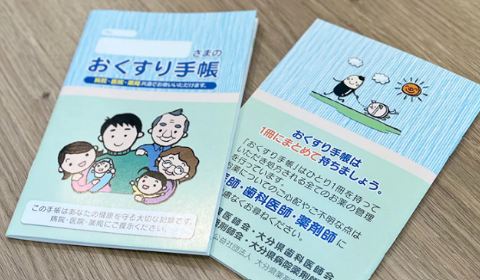
Pharmacies will offer you an お薬手帳 (okusuri techō), a little booklet (there are app versions too) where they sticker in a record of everything you’ve been prescribed. The official pitch is real: if you see several doctors or manage more than one condition, it’s genuinely useful—any pharmacist can scan your history and catch a dangerous combination, which also speeds up your visit.
That said, I’ll be honest—I don’t keep one, because for me it’s just a hassle, and it’s never caused a problem. If you take the occasional course of antibiotics and nothing daily, the upside is thin. So my personal rule of thumb: if you’re juggling multiple hospitals or chronic medications, get the notebook (or the app) and actually use it. If you’re not, don’t feel obligated. It’s offered to everyone, but it’s optional, and skipping it won’t get you turned away.
What you’ll pay at the pharmacy
If you’re enrolled in Japanese public health insurance, you pay your usual share at the pharmacy too—30% for most people under 70 (less for children and many older residents). That share covers both the medicine itself and the dispensing fees, so the total is usually modest. Drug prices are set nationally, which is why the same medicine costs about the same wherever you fill it.
Two cost tips worth remembering. First, generics (ジェネリック) are cheaper for the same active ingredient—on a regular daily medication, switching can save you a few thousand yen a year out of pocket. Second, a rule that took effect in October 2024: if a generic exists but you insist on the brand-name version without a medical reason, you now pay an extra surcharge (roughly a quarter of the price gap) on top of your normal share. For most people, saying “generic is fine” is the easy call.
Finding an English-speaking pharmacy
English support at pharmacies is hit or miss, and it has less to do with the chain than with the location. Branches in big stations, business districts, and areas with lots of international residents are far more likely to have staff who can manage in English or who lean on translation tools and printed multilingual guides. The large dispensing chains you’ll see most often—Ain (アイン), Nihon Chōzai (日本調剤), Qol (クオール), Welcia (ウエルシア), Sugi (スギ薬局)—tend to have better systems for this, but a big-name sign is no guarantee, so it’s fair to ask first.
To find one before you need it:
- Search the Himawari medical portal (Tokyo) or the JNTO medical institution guide, which let you filter for English-capable facilities, pharmacies included.
- On Google Maps, search
薬局 Englishwith your area name and skim recent reviews from foreign visitors. - Pick the pharmacy nearest the clinic you’re visiting—your prescription works at any pharmacy, but the closest one already serves that clinic’s patients daily and knows its prescriptions.
At the counter, a simple line goes a long way: “Do you have English support? I’d like to fill this prescription.” Even where no one speaks much English, pointing to your prescription and your insurance card gets the process moving—this is a routine they run all day.
👉 More on using Himawari and JNTO to find care: How to Book English-Speaking Doctors in Japan
Pharmacies vs. drugstores: buying medicine without a prescription
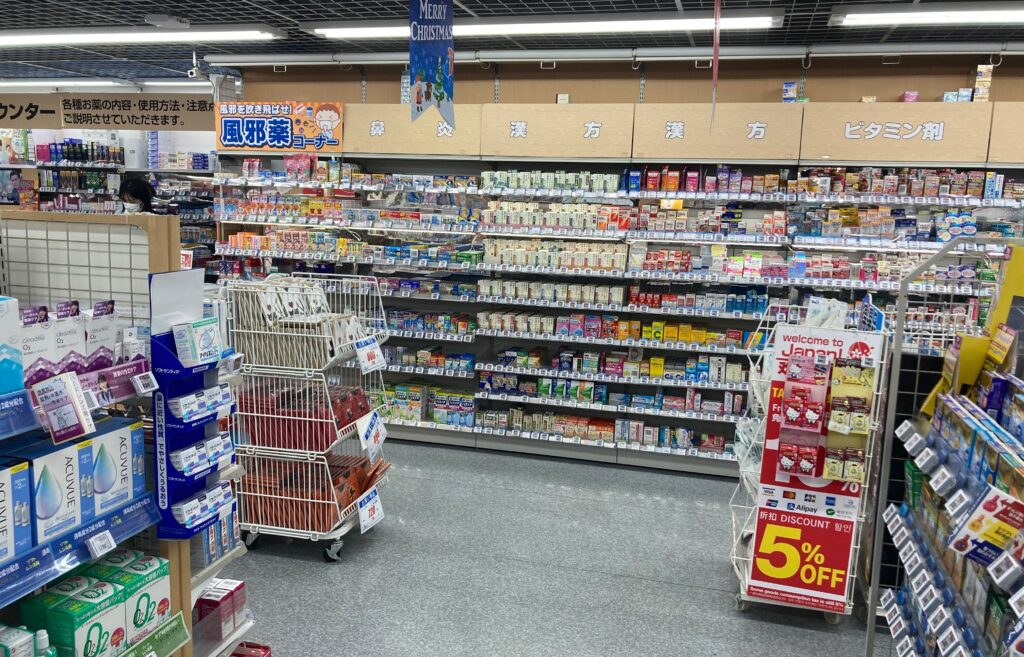
Not everything needs a doctor. For minor stuff—a cold, a headache, hay fever, an upset stomach—you can buy over-the-counter (OTC) medicine yourself, and it helps to know which kind of shop does what.
- A 調剤薬局 (dispensing pharmacy) is where you fill a doctor’s prescription. Many also sell some OTC products, but their main job is prescriptions.
- A ドラッグストア (drugstore)—chains like Matsukiyo, Welcia, Sugi, Tsuruha—sells OTC medicine, cosmetics, and daily goods. Many of the bigger ones also have a dispensing counter inside, so they can do both.
One quirk to expect: the strongest OTC medicines (marked 第1類, dai-isshu) can only be sold when a pharmacist is on duty, so they’re sometimes behind the counter or unavailable late at night. Doses also tend to run milder than what you may be used to abroad. If a cold drags on or a “minor” problem isn’t improving, that’s your cue to see a doctor and get a proper prescription rather than doubling up on OTC pills.
Bringing your own medication into Japan
If you’re moving here or visiting with medicine from home, the rules matter more than people expect—Japan’s drug laws are stricter than most countries’, and “it’s just my prescription” is not a defense at customs.
The basics: you can generally bring up to a one-month supply of most prescription medicines for personal use without special paperwork. Carry them in their original packaging with a copy of your prescription or a doctor’s letter. If you need more than a month’s supply, you must apply in advance for an import certificate called the Yunyu Kakunin-sho (輸入確認書)—the document older guides still call the yakkan shoumei. Apply at least two weeks before you travel.
The part that catches people off guard is the banned list. Some medicines that are everyday prescriptions elsewhere are illegal here:
- Adderall and other amphetamine-based stimulants are prohibited outright—you cannot bring them in, even with a prescription and even for treatment.
- Methylphenidate (e.g. some ADHD medications) is tightly restricted: a personal supply within set limits may be allowed, but beyond that you need the import certificate arranged in advance.
- Some common cold and allergy medicines from abroad contain ingredients (like certain stimulant decongestants) that are restricted here, so check before you pack.
If you rely on a medication that’s banned or restricted, sort it out before you arrive—talk to a doctor in Japan about a legal equivalent, and check the official import guidance for your specific drug. Don’t gamble on getting it through customs.
FAQ: Prescriptions and pharmacies in Japan
Does the 4-day prescription limit include weekends and holidays?
Yes. The 4 days are calendar days counted from the issue date, so weekends and public holidays are included. Watch out for a holiday Monday after a Friday appointment, which can leave you only one or two days to actually fill it.
What do I do if my prescription has expired?
A pharmacy can’t fill or renew an expired prescription. You’ll need to return to the clinic for a new one, which usually means another consultation and fee. If you know you’ll miss the deadline, ask the clinic before it lapses—a doctor can sometimes write a longer validity period on the form.
Can I get refills like back home?
Not by default. Most prescriptions are single-use, and you normally see the doctor again for more. Since 2022, refill prescriptions exist for stable, long-term conditions—up to 3 uses, decided by your doctor—but new drugs, narcotics, psychotropics, and medicated patches are excluded.
Will the pharmacy have someone who speaks English?
Sometimes. It depends more on location than on the chain—pharmacies near big stations and international neighborhoods are more likely to manage in English or use translation tools. Use Himawari, JNTO, or a Google Maps search to find one in advance, and don’t hesitate to ask “Do you have English support?”
Do I really need an お薬手帳 (medication notebook)?
It’s optional. It’s genuinely helpful if you see multiple doctors or take regular medication for more than one condition, because any pharmacist can check your full history. If you rarely take medicine, you can skip it without any trouble—you won’t be turned away.
Can I bring my own medication from home?
Usually up to a one-month supply for personal use, kept in its original packaging with your prescription. More than that requires an import certificate (Yunyu Kakunin-sho / yakkan shoumei) arranged in advance. Some drugs are banned outright—Adderall and other amphetamine stimulants can’t be brought in at all—so check the rules for your specific medicine before you travel.
See Also:
- Need an English-speaking clinic?: How to Book English-Speaking Doctors in Japan
- Want the reception-to-checkout flow?: Visiting a Clinic in Japan: Step-by-Step Guide
- System basics (no GP, referrals, copays): Navigating Japan’s Healthcare System


3 thoughts on “How Prescriptions Work in Japan: 4-Day Validity, Refills, and Pharmacies (2026)”