Getting sick is stressful enough. Getting sick in a country where you can’t read the clinic sign, don’t know which doctor to call, and aren’t sure anyone will understand you—that’s a different level. The good news: once you know how Japan’s system is wired, finding an English-speaking doctor or pharmacy is mostly a matter of using the right tool. There’s no GP to register with and no gatekeeper to get past. You pick the department that fits your symptoms, find a clinic that handles English, and book. This guide walks through exactly how to do each of those, plus what to do at night or on a holiday when the regular clinics are shut.

First, how the system works: no GP, you choose the department
If you’re coming from a country with family doctors, this is the part that throws people. In Japan there’s usually no GP who triages you and refers you onward. The system runs on free access: you go straight to the specialist department that matches your problem. My husband still finds this strange—back home a single doctor was the front door to everything; here you’re the one deciding whether a sore throat is an ENT job or an internal-medicine job.
It sounds harder than it is. For everyday illness, here’s how symptoms map to departments:
| Your symptom | Department to choose |
|---|---|
| Fever, cold, flu, stomach upset, general “feeling awful” | Internal medicine — 内科 (naika) |
| Rashes, eczema, acne, skin trouble | Dermatology — 皮膚科 (hifuka) |
| Ear, nose, throat, sinus, hay fever | ENT — 耳鼻咽喉科 (jibiinkōka) |
| Sprains, fractures, back or joint pain | Orthopedics — 整形外科 (seikei-geka) |
| Eye irritation, vision changes | Ophthalmology — 眼科 (ganka) |
| Women’s health, pregnancy | OB-GYN — 産婦人科 (sanfujinka) |
| A child’s illness | Pediatrics — 小児科 (shōnika) |
| Toothache, dental problems | Dentistry — 歯科 (shika) |
| Anxiety, low mood, sleep problems | Psychosomatic / psychiatry — 心療内科・精神科 |
| Genuinely no idea | Start with internal medicine (naika)—they’ll refer you on |
When in doubt, naika is the safe first stop. A second thing worth knowing before you pick a place: for anything non-urgent, go to a small neighborhood clinic, not a big university hospital. Walk into a large hospital (200+ beds) without a referral letter and you’ll be charged a “selection fee” of at least ¥7,700 on top of your bill, and it isn’t covered by insurance. Get a referral from a local clinic first and you skip it. We cover that whole flow—reception, forms, payment—in Visiting a Clinic in Japan: a Step-by-Step Guide.
Where to find English-speaking doctors in Japan
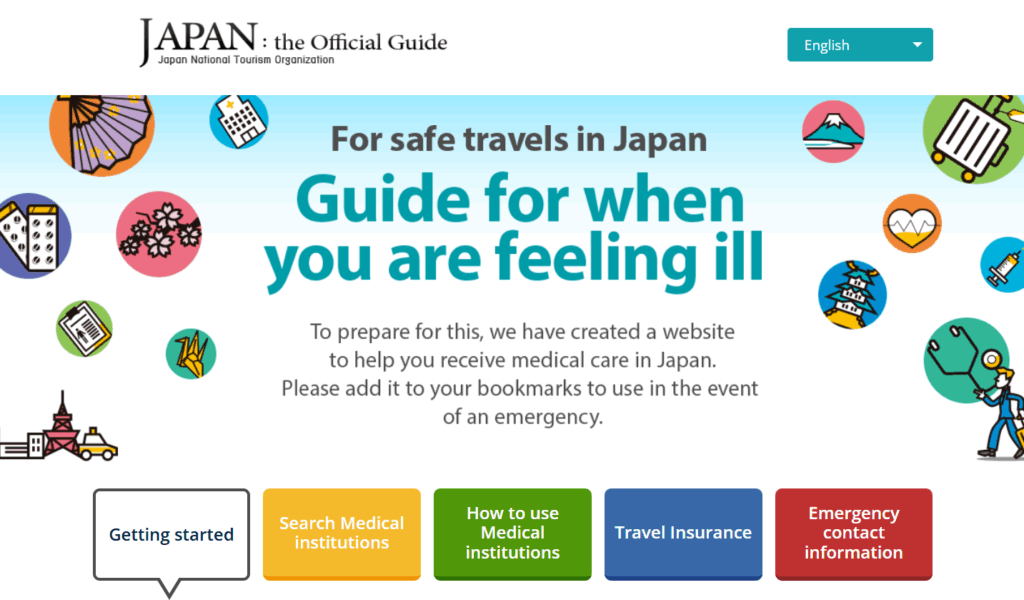
You don’t have to hunt blind. A handful of free official tools, plus a couple of paid services for when you want someone to do the legwork, cover almost every situation. Here’s the lineup at a glance:
| Tool | Best for | Languages | How | Cost |
|---|---|---|---|---|
| JNTO Medical Institution Guide | Searching nationwide by area, department & language | EN, 中, 韓 + JP | Web | Free |
| AMDA Int’l Medical Information Center | Phone help choosing a facility; remote interpretation | 8 languages | Phone | Free |
| Tokyo “Himawari” / prefecture portals | Local clinics & pharmacies with language support | EN, 中, 韓, タイ, 西 | Phone + web | Free |
| Embassy provider lists | Curated English-friendly doctors in big cities | English | Web | Free |
| Japan Healthcare Info (JHI) | Concierge that finds & books for you, with interpreter | English | Web / booking | Paid |
| HOTEL de DOCTOR 24 | Late-night or online consults; coordinates a pharmacy | Multilingual | Web / app | Paid |
| Forums & Google Maps | Recent, real-world tips on specific clinics | English | Web | Free |
Official, nationwide
- JNTO Medical Institution Guide — The single most useful starting point. Filter by region, department, language, accepted credit cards, and JMIP accreditation (a certification for facilities set up to handle international patients). Available in English, Chinese, and Korean as well as Japanese.
- AMDA International Medical Information Center — When you’d rather just talk to a person, call 03-6233-9266 (weekdays, roughly 10:00–16:00). Staff give referrals in eight languages including English, and they also offer free remote medical interpretation by phone—handy if you arrive at a clinic that has no English-speaking staff.
City and prefecture portals
Most prefectures run a medical information line for residents, and they’ll tell you which nearby clinics handle foreign languages. Tokyo’s is “Himawari” (03-5285-8181), open every day 9:00–20:00 with support in English, Chinese, Korean, Thai, and Spanish; it covers both clinics and pharmacies. Outside Tokyo, search “<your prefecture> medical information English” and you’ll usually find the local equivalent.
Curated lists and concierge services
- Embassy provider lists — The US, UK, and other embassies publish city-by-city lists of English-friendly doctors. These tend to lean toward private and international clinics, so they’re reliable on language but not always the cheapest option.
- Japan Healthcare Info (JHI) — A paid concierge that will find a suitable clinic, book the appointment, and arrange interpretation for you. Worth it when you’re dealing with something complex, or simply don’t have the energy to navigate it yourself.
Real-world signal (double-check before you go)
Expat forums and the Japan subreddits are full of recent, specific recommendations—which clinic actually has an English-speaking doctor on Tuesdays, who’s friendly to newcomers, who takes your insurance. Treat it as a lead, not gospel: staff and hours change, so confirm with the clinic before you build your day around it.
A quick Google Maps trick
For a fast, local search, type the department plus “English” into Google Maps with your area name: 内科 English, 皮膚科 English, 歯科 English. On clinic websites, the phrases to look for are 英語対応 (“English available”) and 外国語対応 (“foreign-language support”). Skim recent reviews from foreign patients—they’ll tell you fast whether the “English available” claim holds up in practice.
Finding an English-speaking pharmacy
One thing that surprises newcomers: in Japan the doctor doesn’t hand you your pills. You get a paper prescription and fill it at a separate dispensing pharmacy (調剤薬局, chōzai yakkyoku)—look for the green-and-white sign, usually clustered right around any clinic. So “finding English support” is really two searches: the clinic and the pharmacy.
The good news is you can use the same tools. Himawari and the JNTO guide both let you filter for English-capable pharmacies, and a Google Maps search for 薬局 English plus your area works the same way. The simplest move, though, is to pick the pharmacy nearest the clinic you visited—your prescription is valid at any pharmacy, but the closest one already handles that clinic’s prescriptions all day and knows them well.
One time-sensitive detail to remember: a standard prescription is valid for only 4 days including the day it’s issued, and that counts weekends and holidays. Don’t sit on it. For the full rundown on filling prescriptions, refills, costs, and buying medicine over the counter, see How Prescriptions and Pharmacies Work in Japan.
English-friendly clinics and hospitals to know
A few Tokyo names that come up again and again among expats:
- St. Luke’s International Hospital — A long-standing favorite. Many doctors speak English, and the International Desk near reception helps with paperwork and payment in several languages. (Remember the referral rule: as a large hospital, it charges the selection fee for non-referred first visits.)
- Shinjuku Green Tower Internal Medicine Clinic — Some doctors speak English, and when they don’t, staff lean on translation apps. Newcomers describe it as welcoming, which counts for a lot on a bad day.
- Plaza Clinic (formerly Roppongi Hills Clinic) — Offers translators who sit in on your consultation, which makes the whole visit far less nerve-wracking.
Not in Tokyo? Every major city—Osaka, Nagoya, Fukuoka, Sapporo—has international and university hospitals with English support, and the JNTO guide will surface them by region. The method matters more than any single name: search the JNTO guide for your area, cross-check against your embassy’s list, and read a few recent patient reviews. That trio gets you a shortlist almost anywhere in the country.
How to book—and what to say
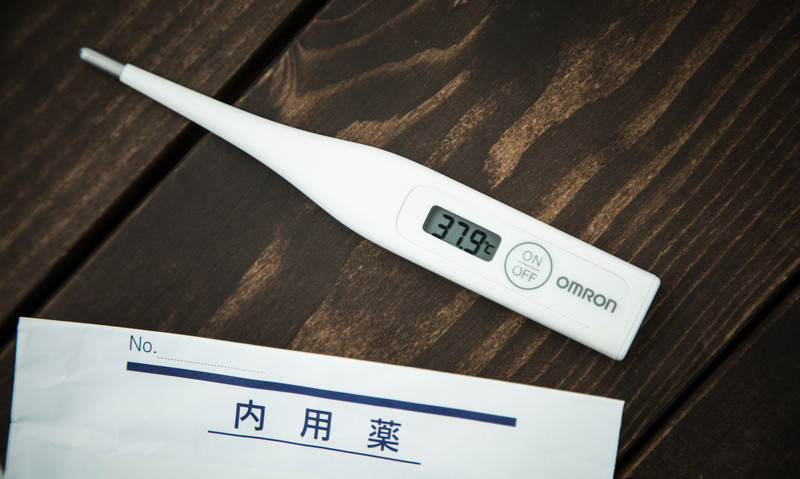
Many clinics take walk-ins, so technically you can just show up. But booking ahead does two things: it shortens the wait, and—more importantly here—it lets you confirm English support before you commit your afternoon to it. Some clinics book by phone, some through a web form, and a growing number use an app that gives you a numbered slot so you can wait at home until it’s nearly your turn.
Whether you call or fill in a form, have these four things ready:
- Your name and a contact number
- Your main symptom in a sentence (“fever and sore throat since yesterday”)
- Whether you have Japanese health insurance
- The question that saves the day: “Is there a doctor who speaks English?” (Eigo ga hanaseru oisha-san wa imasu ka?)
If a call in Japanese feels like too much, this is exactly what AMDA’s phone line or a concierge like JHI is for—let them make the booking. On the visit itself, a free tool like YOLO MEDICAL generates a multilingual symptom questionnaire (17 languages) you can hand over at reception, which smooths things even when the English is patchy.
How much English should you actually expect?
“English available” covers a wide range, and it helps to know where on that range you’re landing before you walk in. Setting your expectations right is half the battle.
- International hospitals and clinics (think St. Luke’s, the embassy-list places) — Often genuinely fluent doctors and dedicated international desks. The smoothest experience, usually at a higher price.
- Neighborhood clinics that list “英語対応” — This can mean a doctor who studied abroad, or it can mean the front desk has a tablet with a translation app and a doctor who knows the medical basics in English. Both are workable; just don’t expect a fluent chat about your symptoms.
- Everywhere else — Plenty of excellent clinics run entirely in Japanese. You can still use them: bring a multilingual questionnaire, line up phone interpretation through AMDA, or take a Japanese-speaking friend.
A small habit that saves a lot of grief: have a backup ready even at an “English-friendly” place. The doctor who speaks English might be off that day, or out sick themselves. A translation app on your phone and a written symptom note mean a last-minute change doesn’t derail your visit. Medical vocabulary is the one area where I’d never rely on memory alone—have the words for your symptoms, any allergies, and your regular medications written down before you go.
After hours, weekends, and emergencies
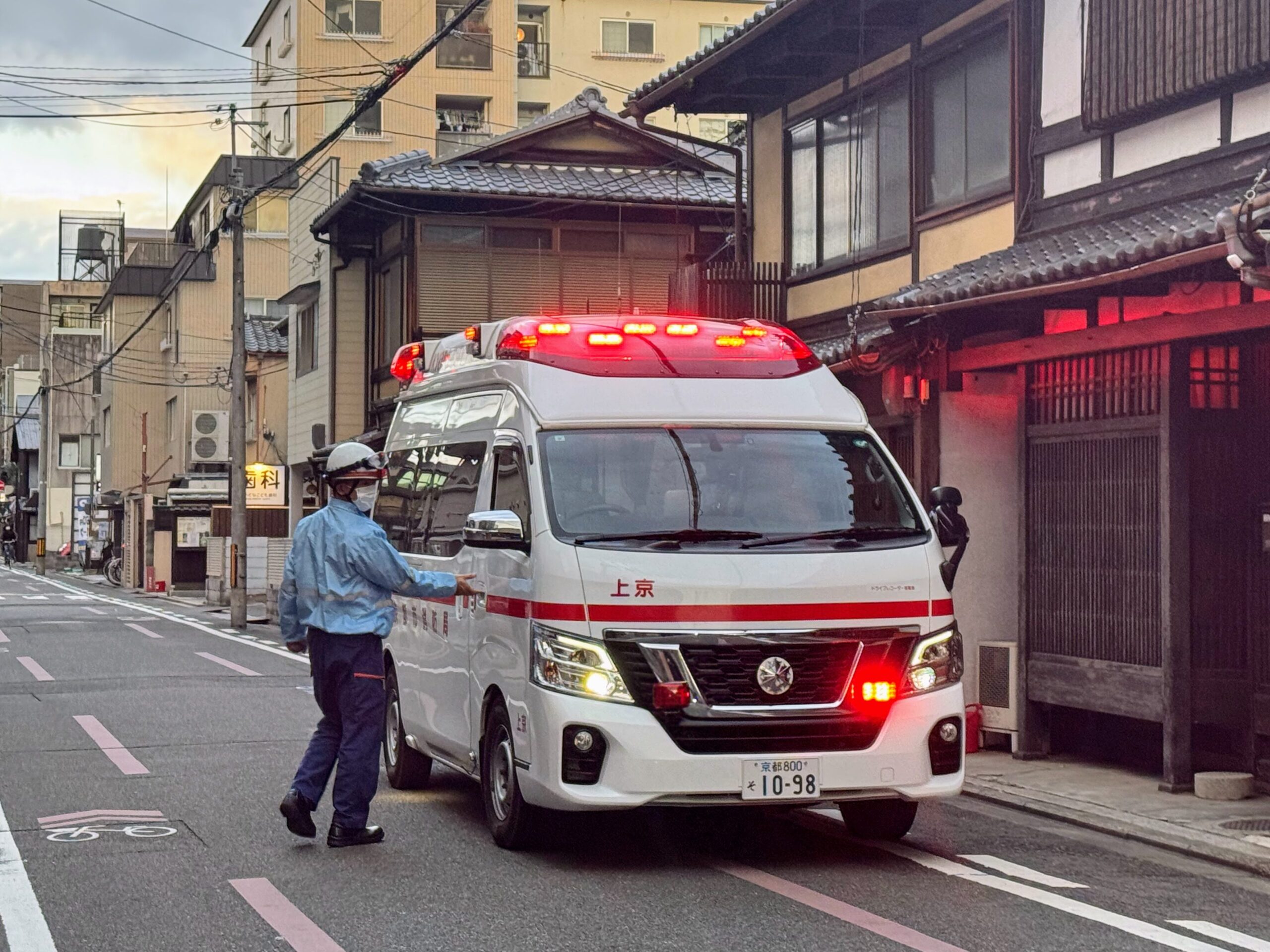
Illness doesn’t keep office hours. A few options for when the regular clinics are shut:
- Not sure if it’s urgent? Many regions run a nurse-led triage line, #7119, that helps you decide whether to call an ambulance, head to an ER, or wait for a clinic. One honest caveat: coverage and English support vary a lot by region—Tokyo runs it 24 hours and some cities offer many languages, but plenty of areas operate in Japanese only. Check what your prefecture offers before you need it.
- Paid telemedicine. Services like HOTEL de DOCTOR 24 offer multilingual online consultations around the clock and will coordinate with a nearby pharmacy for your medicine—useful at night, or when you’re traveling and don’t know the area.
- A real emergency. For an ambulance or fire, dial 119; for police, 110. Both are free, and you can request help even with limited Japanese—say “kyūkyū” (emergency) and your location.
For the full picture on calling for help in Japan, see Emergency Numbers in Japan: 119 & 110. And to understand the bigger system—insurance, costs, how the pieces fit—see Navigating Japan’s Healthcare System.
A few things that make it easier
- Write your symptoms down before you go—a short note in simple English (or run through a translation app) beats fumbling for words at the counter.
- Bring ID and your insurance card. Your residence card or passport, plus your insurance (now your My Number card registered for insurance, or a Certificate of Eligibility). Without insurance you pay 100% on the day—keep receipts to claim against private or travel cover later.
- Bring cash. Plenty of clinics still don’t take cards, and certificates or referral letters can cost extra.
- Go early. Monday mornings and the first day after a holiday are the worst for waits. Many clinics also stop accepting patients ~30 minutes before closing, so check the reception cutoff, not just the closing time.
FAQ
Do I need an appointment, or can I just walk in?
Most clinics take walk-ins, so you can show up without booking. Booking ahead mainly saves you waiting time and lets you confirm English support first. For large hospitals, you generally want a referral from a local clinic to avoid the extra selection fee.
How do I find a doctor who actually speaks English?
Start with the JNTO Medical Institution Guide and filter by language, or call AMDA (03-6233-9266) or your prefecture’s medical line (Tokyo: Himawari, 03-5285-8181) and ask them to point you to one. Cross-check against your embassy’s provider list and recent patient reviews before you go.
What does it cost without Japanese health insurance?
You pay the full amount on the day rather than the usual 30% share. A simple clinic visit is often still in the low tens of thousands of yen, but hospital care can run much higher. Bring enough cash and keep every receipt so you can claim against private or travel insurance.
Will the pharmacy have English support too?
Sometimes—it depends more on location than on the chain. Pharmacies near big stations and international neighborhoods are more likely to manage in English. Use Himawari or the JNTO guide to find one in advance, or simply use the pharmacy nearest your clinic and don’t hesitate to ask, “Do you have English support?”
It’s the middle of the night and I’m not sure it’s an emergency. What do I do?
If your area has #7119, call it for nurse-led advice on whether you need an ambulance or can wait (English support varies by region). A paid multilingual telemedicine service like HOTEL de DOCTOR 24 is another after-hours option. If it’s clearly serious—chest pain, difficulty breathing, heavy bleeding—don’t hesitate: dial 119 for an ambulance.
See also
- Visiting a Clinic in Japan: a Step-by-Step Guide — reception to pharmacy, with the scripts and forms.
- How Prescriptions and Pharmacies Work in Japan — the 4-day rule, refills, costs, and OTC medicine.
- Navigating Japan’s Healthcare System — how insurance and costs actually work.
- Emergency Numbers in Japan: 119 & 110 — what to dial, and what to say.

3 thoughts on “How to Find and Book English-Speaking Doctors and Pharmacies in Japan”