Here’s something most first-timers don’t realize: thanks to the weak yen, Japan is arguably the best-value luxury destination in the world right now. With the yen hovering around 158–160 to the US dollar in 2026, a room at a world-class Tokyo hotel costs roughly 30–40% less than an equivalent property in New York or London. A splurge that would be eye-watering elsewhere is, here, genuinely within reach. This guide walks through the best hotels and ryokans in Tokyo, Kyoto, and Osaka, with the areas to base yourself and what each stay is really like.
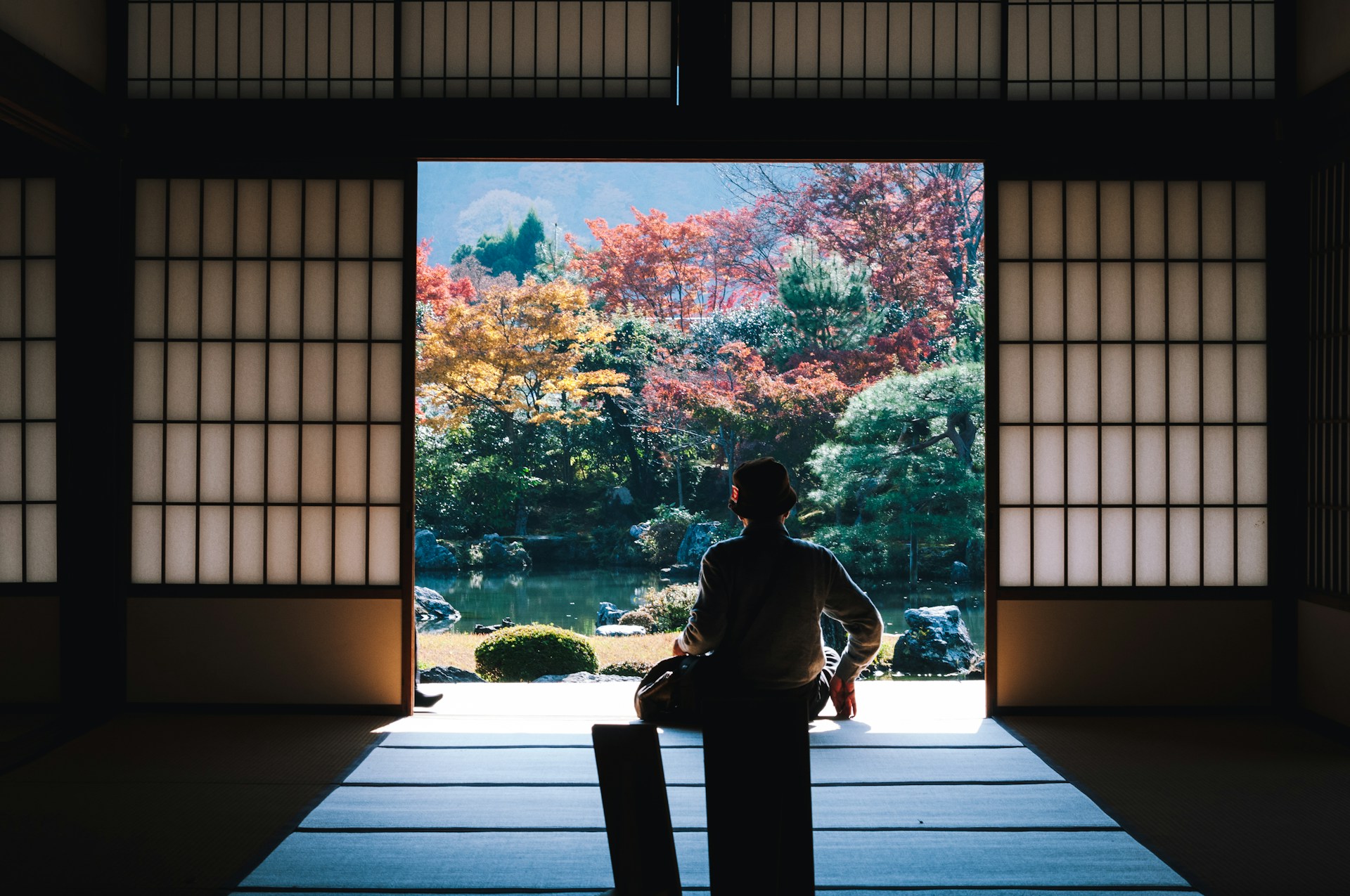
Booking tip: luxury rates swing hard by date, and the same room can vary by tens of thousands of yen between sites. I start on Agoda, which is consistently competitive on Japanese hotels and ryokans, then cross-check before booking. One thing to plan around: rates double or triple during cherry blossom season and Golden Week, so the prices below are indicative for a standard double room outside those peaks. Most rooms include free cancellation, and Agoda charges no booking fee.
Recommended Areas to Stay in Tokyo
Tokyo is enormous, so staying near a good train connection matters more than staying “central.” Pick your area around what you came to do:
East Tokyo (history and old-town atmosphere)
- Asakusa: Senso-ji Temple, the Skytree, and old shopping streets. Atmospheric and good value.
- Ueno: parks and museums, an affordable feel, and a direct line to Narita Airport.
- Akihabara: pop culture and electronics, central, with easy hops to Asakusa and Ueno.
Central Tokyo (luxury and transport hubs)
- Tokyo Station & Marunouchi: ideal if you’re traveling by shinkansen, with top hotels and unbeatable connections.
- Ginza: Tokyo’s upscale shopping district and a lovely place to stay, especially on car-free weekend afternoons.
- Nihonbashi: a historic merchant district with polished hotels and excellent dining, a step from Tokyo Station.
West Tokyo (nightlife, shopping, and onward travel)
- Shinjuku: endless dining and nightlife, with everything from hostels to the Park Hyatt.
- Shibuya: the heart of youth culture and the famous Scramble Crossing, well connected across the city.
- Shinagawa: 11 minutes from Haneda on the Keikyu Line plus shinkansen access to Kyoto and Osaka, so it’s the convenience pick.
Best Luxury Hotels in Tokyo
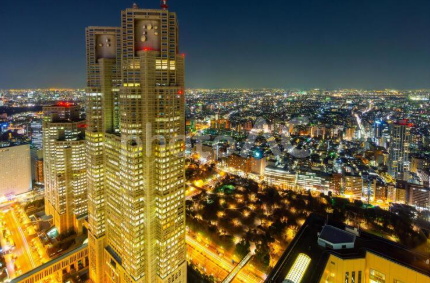
Imperial Hotel Tokyo
Founded over 130 years ago, the Imperial is Japan’s grande dame of hotels, blending history, elegance, and famously polished service. It topped Japan’s Customer Satisfaction Index for 12 straight years.
Why guests love it: Generations of guests return for service that locals consider the benchmark for Japanese hospitality.
- Location: beside Hibiya Park, a short walk from Ginza.
- Features: 10 restaurants, three bars, and tea-ceremony experiences.
- Rates: from around ¥90,000 per night (double room).
Hotel New Otani Tokyo
Built around a 400-year-old, 10-acre Japanese garden, the New Otani is a serene escape in the middle of the city, pairing traditional hospitality with a sprawling choice of dining.
Why guests love it: The 400-year-old garden is what visitors rave about — a rare pocket of calm in central Tokyo.
- Location: Kioicho, near Akasaka-Mitsuke.
- Features: a historic garden and over 30 restaurants and bars.
- Rates: from around ¥80,000 per night (double room).
Park Hyatt Tokyo
The Lost in Translation hotel reopened in December 2025 after a 19-month, top-to-bottom renovation, the most comprehensive in its 30-year history. All 171 rooms have been reimagined, and the legendary New York Grill & Bar returns in restored black-and-chrome glory, joined by Girandole by Alain Ducasse. High in the Shinjuku Park Tower, the views remain some of the best in the city.
Why guests love it: A long-time favorite of design lovers and film fans, now with a freshly renovated shine.
- Location: Shinjuku, about 10 minutes’ walk from the station.
- Features: newly renovated rooms, panoramic city views, and iconic dining.
- Rates: from around ¥160,000 per night (double room).
The Ritz-Carlton Tokyo
Occupying the top floors of Tokyo Midtown in Roppongi, with sweeping views and, on clear days, Mount Fuji. Home to the Michelin-starred Azure 45.
Why guests love it: Consistently praised for its sky-high views and warm, exacting service.
- Location: Roppongi, within Tokyo Midtown.
- Features: spacious modern rooms, a renowned spa, and Roppongi’s dining at your feet.
- Rates: from around ¥120,000 per night (double room).
Mandarin Oriental Tokyo
Perched atop the Nihonbashi Mitsui Tower, the Mandarin pairs panoramic views with one of Tokyo’s most decorated dining and spa line-ups.
Why guests love it: Repeatedly ranked among Tokyo’s best for its Michelin dining and top-floor spa.
- Location: Nihonbashi, close to Tokyo Station.
- Features: multiple Michelin-starred restaurants and a spa across the entire 37th floor.
- Rates: from around ¥120,000 per night (double room).
Shangri-La Tokyo
A Forbes-recognized hotel right by Tokyo Station, prized for warm, impeccable service and quick access to the Imperial Palace and Ginza. A strong choice if you’re traveling by shinkansen.
Why guests love it: Guests single out the attentive service and the unbeatable by-the-station location.
- Location: beside Tokyo Station.
- Features: spacious rooms, a pool and spa, and a central transit hub at your door.
- Rates: from around ¥120,000 per night (double room).
Conrad Tokyo
A serene, contemporary choice overlooking the Hamarikyu Gardens, with Michelin-starred dining and easy reach of Ginza.
Why guests love it: Loved for its garden and bay views, a calm counterpoint to the city buzz.
- Location: Shiodome, beside Hamarikyu Gardens.
- Features: garden views, refined interiors, and a calm setting near the bay.
- Rates: from around ¥70,000 per night (double room).
Cerulean Tower Tokyu Hotel
The most central choice in Shibuya, directly connected to the station and steps from the Scramble Crossing, a notch more attainable than the marquee names.
Why guests love it: The go-to for travelers who want to wake up right on top of Shibuya.
- Location: connected to Shibuya Station.
- Features: high-floor rooms, some with bathtub views over the city.
- Rates: from around ¥60,000 per night (double room).
Traveling on a tighter budget? Tokyo also has excellent business and capsule hotels. See Japan on a Budget: Affordable Hotels in Tokyo, Kyoto & Osaka for the cheaper end.
Kyoto or Osaka: Where Should You Base Yourself?
A common dilemma, and the cities are only 15 minutes apart by shinkansen, so you can easily day-trip between them. Choose by what you’re after:
- Kyoto for history, temples, and quiet mornings, and for the ryokan experience at its best. Base near Kyoto Station or downtown.
- Osaka for food, nightlife, and value, with great transport. Base around Namba or Umeda.
Short on time? Staying in Kyoto and day-tripping to Osaka for an evening in Dotonbori is the move most first-timers are happiest with.
Why a Ryokan Is Worth One Night, at Least
If you do one splurge in Japan, make it a night in a ryokan, a traditional inn. You sleep on a futon over tatami, soak in an onsen bath, and are served a multi-course kaiseki dinner built around the season and the region. It’s less “hotel” and more a cultural experience you wear a yukata through. Kyoto has the most storied ryokans, but you’ll find them across the country, and even Osaka now has a modern take (more on that below). One note: ryokan rates are often quoted per person and include dinner and breakfast, so they aren’t directly comparable to a room-only hotel rate.
Recommended Areas to Stay in Kyoto
Kyoto is laid out on a grid, but its sights are spread out and the transport leans on buses, so where you stay really shapes your days.
- Kyoto Station Area: the transport hub, with the widest choice of rooms and easy access to Fushimi Inari and Arashiyama. Best for convenience.
- Shijo Kawaramachi & Karasuma: downtown dining and shopping, close to Nishiki Market and Gion, with morning walks along the Kamo River.
- Gion & Higashiyama: the most atmospheric base, among Kiyomizu-dera, Yasaka Shrine, and the old lanes. Where the luxury hotels and ryokans cluster.
- Arashiyama: the bamboo grove and riverside, lovely for early mornings, with a mix of luxury hotels and ryokans.
- Ohara, Kurama & Kibune: Kyoto’s green retreat in the northern hills, for travelers who want nature and quiet over convenience.
Best Hotels and Ryokans in Kyoto
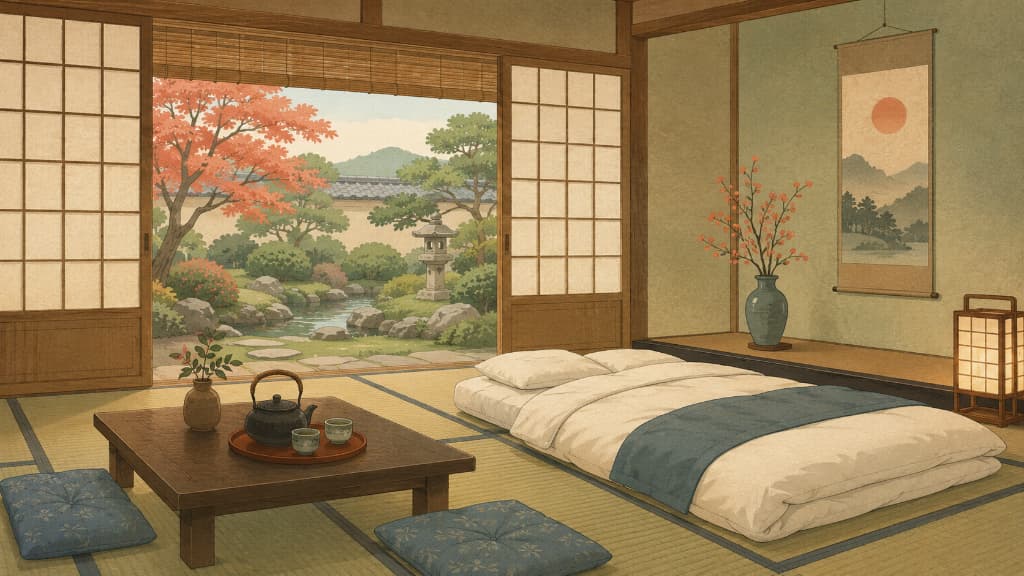
Tawaraya Ryokan
Famously Steve Jobs’ favorite, Tawaraya is the quintessential Kyoto inn, three centuries of understated elegance in wood, paper, and impeccable service. If you want the definitive ryokan stay, this is it.
Why guests love it: Widely regarded as Japan’s finest ryokan, revered for understated omotenashi.
- Location: central Kyoto, near Kawaramachi.
- Rates: approximately ¥120,000–¥300,000 per night.
Hiiragiya Ryokan
Nearly 200 years old and long beloved by writers and royalty, Hiiragiya offers a quieter, nostalgic Kyoto. Nobel laureate Yasunari Kawabata praised its hushed atmosphere.
Why guests love it: Cherished for the hushed, nostalgic atmosphere that writers have praised for generations.
- Location: near Kawaramachi and the old neighborhoods.
- Rates: approximately ¥100,000–¥250,000 per night.
HOSHINOYA Kyoto
Reached only by private boat up the Oi River from Togetsukyo Bridge in Arashiyama, this is a luxury ryokan retreat with river views from every room. The arrival alone feels like leaving the modern world behind.
Why guests love it: The arrival by private boat up the river is the detail guests never forget.
- Location: Arashiyama, by the Togetsukyo Bridge.
- Rates: approximately ¥150,000–¥300,000 per night.
The Ritz-Carlton Kyoto
Along the Kamo River, blending Kyoto tradition with modern comfort and walkable to Gion and Pontocho.
Why guests love it: Praised for its riverside rooms and a location that strolls to Gion.
- Location: Kamogawa-Nijo, near Gion.
- Features: spacious river-view rooms and a world-class spa.
- Rates: from around ¥140,000 per night (double room).
Four Seasons Hotel Kyoto
Built around an 800-year-old pond garden in Higashiyama, a calm base near Kiyomizu-dera with Michelin-starred dining and a beautiful spa.
Why guests love it: Guests love waking to the 800-year-old garden in the heart of Higashiyama.
- Location: Higashiyama, near the historic temples.
- Rates: from around ¥130,000 per night (double room).
Aman Kyoto
Hidden in a forested garden in the northern hills of Takagamine, Aman is the ultimate quiet escape: minimalist villas, moss and trees, and total seclusion within reach of the city.
Why guests love it: Known for a stillness and seclusion you rarely find this close to a city.
- Location: Takagamine, surrounded by nature.
- Rates: from around ¥200,000 per night (double room).
Park Hyatt Kyoto
On the slope of Ninenzaka, surrounded by Kyoto’s most iconic lanes and steps from Kiyomizu-dera and Yasaka Shrine. Understated and beautifully located.
Why guests love it: Prized for a setting among Kyoto’s most beautiful historic lanes.
- Location: Ninenzaka, Higashiyama.
- Rates: from around ¥130,000 per night (double room).
Recommended Areas to Stay in Osaka
- Namba (for first-timers): Dotonbori, Shinsaibashi, and Amerikamura on your doorstep, with a direct train to Kansai Airport in under an hour and Shin-Osaka 15 minutes away for the shinkansen.
- Umeda (for day trips): the northern hub, with fast trains to Kyoto (30 minutes on the JR Special Rapid for ¥580) and the rest of Kansai, plus easy access back to Namba and Osaka Castle.
Best Luxury Hotels in Osaka
Four Seasons Hotel Osaka
Opened in August 2024 in the historic Dojima district, this is Osaka’s newest luxury landmark. Its standout is the GENSUI floor on the 28th level, a contemporary reimagining of a ryokan with clean lines, wooden blinds, and traditional Japanese baths, so you can have the ryokan experience and a city hotel in one stay.
Why guests love it: The city’s new luxury benchmark, and the GENSUI ryokan floor is the talking point.
- Location: Dojima, about 10 minutes from Osaka Station.
- Features: indoor infinity pool, the GENSUI modern-ryokan floor, and Kitashinchi dining nearby.
- Rates: from around ¥100,000 per night (double room).
The Ritz-Carlton Osaka
Japan’s first Ritz-Carlton, in Umeda, known for warm, European-style interiors and exceptional service on high floors with city views.
Why guests love it: Long loved for its warm, residential feel and standout service.
- Location: Umeda, by Hanshin Umeda Station.
- Rates: from around ¥90,000 per night (double room).
St. Regis Osaka
The only St. Regis in Japan, a quieter, refined choice in the Honmachi business district with the brand’s signature butler service. Every room sits on the 17th floor or above.
Why guests love it: Guests highlight the signature butler service and the quiet, central setting.
- Location: Honmachi, 3 minutes from the subway.
- Rates: from around ¥80,000 per night (double room).
Conrad Osaka
High in the Festival Tower West, with some of the best skyline views in the city and spacious, design-led rooms.
Why guests love it: Repeatedly singled out for some of the best skyline views in Osaka.
- Location: direct access to Higobashi Station.
- Features: generous 50㎡ rooms blending modern and Japanese style.
- Rates: from around ¥100,000 per night (double room).
Imperial Hotel Osaka
A more attainable classic, set in a tranquil riverside spot a little outside the center, with the Imperial’s hallmark attentive service and a free shuttle from Osaka Station.
Why guests love it: A calmer riverside classic that regulars return to for the service.
- Location: riverside near Sakuranomiya Station.
- Rates: from around ¥30,000 per night (double room).
Tips for Booking the Right Hotel in Japan
- Book early for peak seasons. Cherry blossom (late March to early April) and autumn foliage (November) sell out months ahead and cost two to three times more. See When Is the Best Time to Visit Japan?
- Compare sites. Rates differ a lot between Agoda, Booking.com, and the hotel’s own page, especially at the top end.
- Mix it up. One ryokan night and the rest in city hotels often beats an all-luxury trip, for both budget and variety.
- Forward your luggage. Use takkyubin to send bags ahead between cities so you’re not wheeling a suitcase through a ryokan’s tatami entrance.
Frequently Asked Questions
Is luxury in Japan really good value right now?
Yes. With the yen around 158–160 to the US dollar in 2026, top-tier Japanese hotels run roughly 30–40% cheaper in dollar terms than comparable properties in New York or London. It’s one of the best moments in years to splurge here.
Ryokan or luxury hotel: which should I choose?
Do both if you can. A ryokan is a cultural experience with tatami, onsen, and kaiseki dinner, best for a night or two, while a city hotel is more practical as a base. Many travelers book one memorable ryokan night and spend the rest in hotels.
Should I stay in Kyoto or Osaka?
Kyoto for temples, tradition, and ryokans; Osaka for food, nightlife, and value. They’re 15 minutes apart by shinkansen, so basing in one and day-tripping to the other works well. Short on time, most people prefer Kyoto as the base.
Are hotel prices quoted per room or per person?
City hotels quote per room per night. Ryokans, especially those with dinner and breakfast included, are often quoted per person, so check carefully when comparing the two.
When are hotel prices highest?
Cherry blossom season (late March to early April), Golden Week (late April to early May), and autumn foliage (November), when rates can double or triple. For the same hotels at lower prices, aim for early December, late January, or June.
Final Thoughts
Tokyo brings world-class luxury, Kyoto brings tradition and the ryokan experience, and Osaka brings energy and value, all of it more attainable than usual while the yen stays weak. Pick your base around what you came for, book early for the busy seasons, and treat yourself to at least one ryokan night. For the rest of your planning, see our guide to planning a trip to Japan and the full Japan trip cost breakdown.

6 thoughts on “Best Hotels & Ryokans in Tokyo, Kyoto & Osaka (2026)”