If you’re living in Japan and want to keep driving, sooner or later you’ll need a Japanese license. You can’t run on your home-country license indefinitely, and the conversion process—known as gaimen kirikae (外免切替)—got noticeably stricter in October 2025. Whether it’s a quick formality or a months-long ordeal depends almost entirely on which country issued your license. This guide explains the three ways foreigners drive in Japan, who can skip the tests, what changed in 2025, and how to actually pass the part that trips people up.
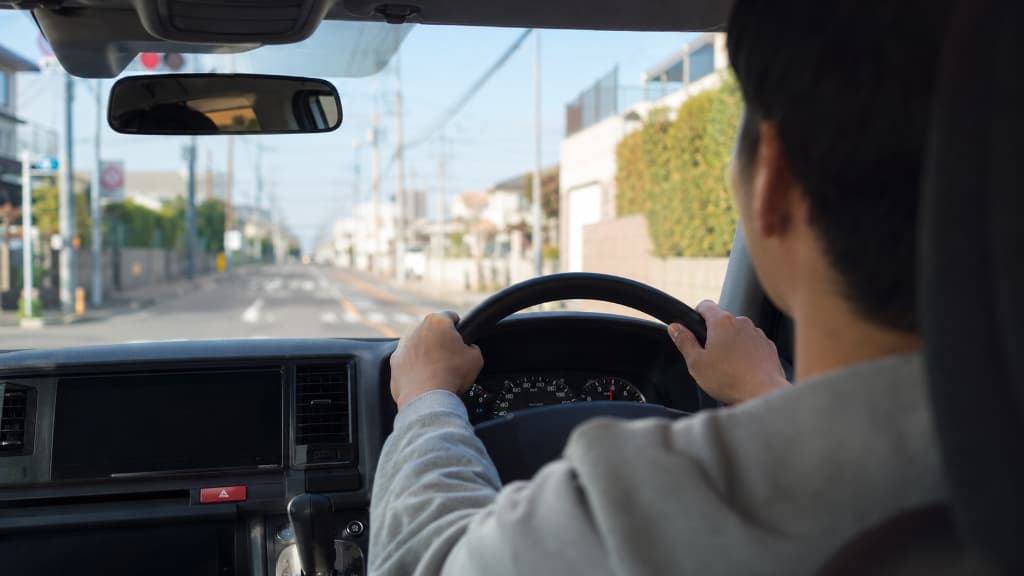
My husband went through the whole thing on an Indian license, so this isn’t theory—I’ll flag the real-world snags along the way. If you’re also weighing whether to buy a car at all, start with our guide to buying a car in Japan.
Three Ways to Drive in Japan on a Foreign License
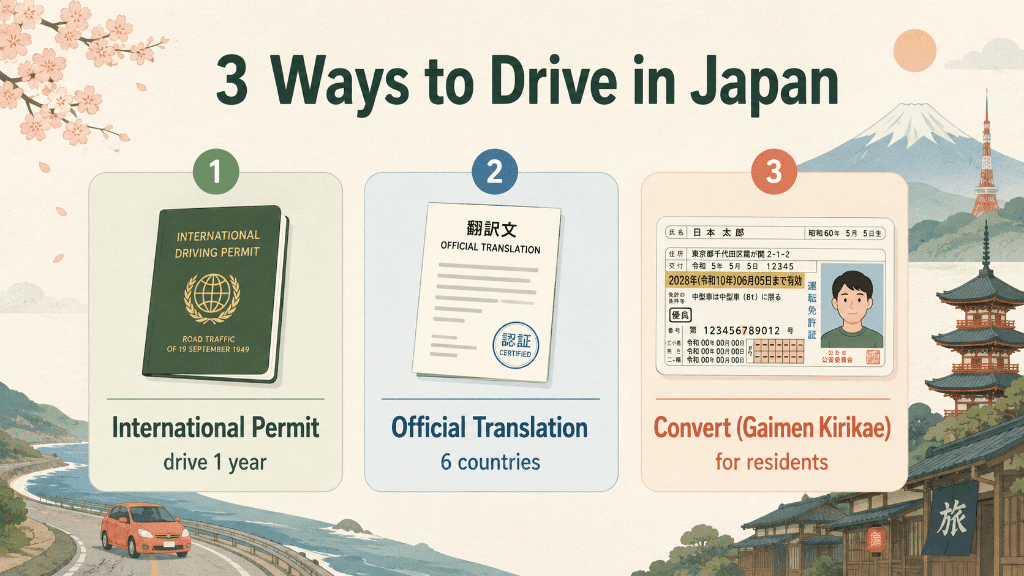
- International Driving Permit (IDP): If your country is part of the Geneva Convention, get an IDP before you arrive. It lets you drive for one year from your date of entry (or until the IDP expires, whichever comes first). Perfect for tourists and short stays—useless for renewing, since you can’t get one inside Japan.
- Official translation route (6 places): Switzerland, Germany, France, Belgium, Monaco, and Taiwan don’t use Geneva IDPs. Instead, drive on your home license plus an official Japanese translation (from JAF, your embassy, or—for Taiwan—the Taiwan-Japan Relations Association), valid for one year from entry.
- Convert to a Japanese license (外免切替): The only real long-term option for residents. This is the rest of this guide.
What Is Gaimen Kirikae?
Gaimen kirikae is the procedure for exchanging a valid foreign driver’s license for a Japanese one. You apply at a driver’s licensing center (運転免許試験場) in the prefecture where you’re registered as a resident. The headline requirement people forget: you must prove you held the license and stayed in the issuing country for at least three months after getting it—this rule exists to stop “license tourism,” where people get a quick license abroad purely to convert it. Depending on your country, you may also need to pass a knowledge test and a practical driving test, or you may skip both. That distinction is everything, so let’s settle it first.
Do You Have to Take the Tests? The Exemption List
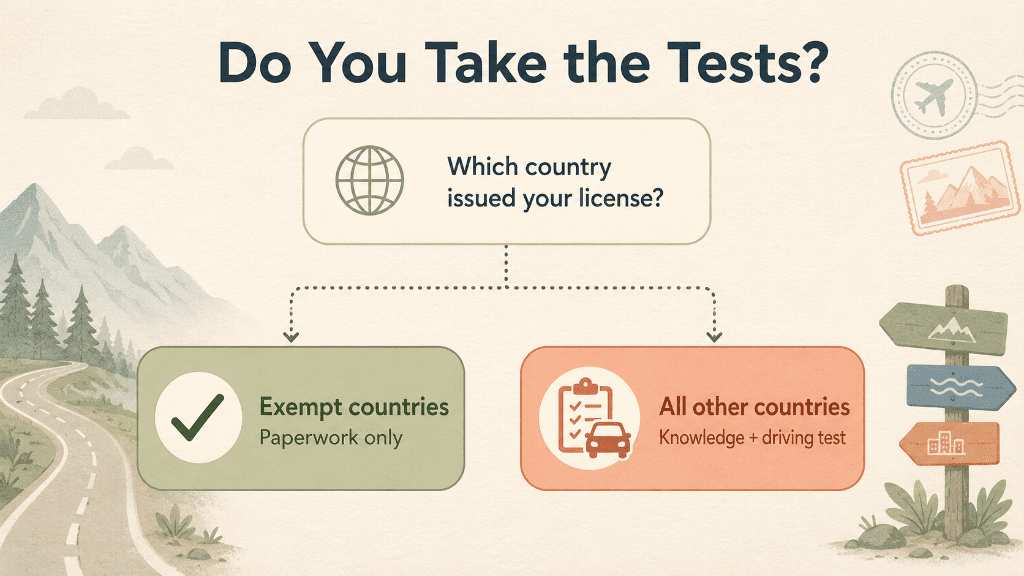
Holders from a set of roughly 29 countries and regions are exempt from both the knowledge and skills tests—for them, conversion is mostly paperwork plus an eyesight check. As of late 2025, that list includes:
Iceland, Ireland, the United Kingdom, Italy, Australia, Austria, the Netherlands, Canada, South Korea, Greece, Switzerland, Sweden, Spain, Slovenia, the Czech Republic, Denmark, Germany, New Zealand, Norway, Hungary, Finland, France, Belgium, Poland, Portugal, Monaco, Luxembourg, Taiwan, and the United States only for licenses from Ohio, Oregon, Colorado, Virginia, Hawaii, Maryland, and Washington (Indiana is exempt from the skills test only).
If your license is from anywhere not on that list—including India, China, Brazil, the Philippines, Vietnam, Thailand, and most US states—you must pass both the knowledge test and the practical driving test. This is the harder road, and it’s where you should budget real time. (Always verify the current list with your local licensing center, as it changes.)
What Changed on October 1, 2025
The rules tightened significantly, so older guides will mislead you. The key changes:
- Residence record now required. You must submit a jūminhyō (住民票), so short-term visitors and tourists can no longer convert—this is now a residents-only process.
- The knowledge test got much harder. It went from about 10 true/false questions at a 70% pass mark to 50 written questions requiring 90% to pass (illustration questions were dropped). It’s still offered in many languages (around 21), but you can’t coast through it anymore.
- The driving test got stricter. Scoring is tougher on turns, signaling, and tasks like pedestrian-crossing procedure.
- The 3-month residence check is enforced more rigorously. Be ready to document your time in the issuing country with entry/exit records.
Documents You’ll Need
- Your valid foreign driver’s license
- An official Japanese translation of it (from JAF, your embassy/consulate, or the Taiwan-Japan Relations Association for Taiwan)
- Residence record (住民票) and a photo ID / residence card
- Passport(s) showing entry/exit stamps that prove ≥3 months in the issuing country after you got the license
- An application photo and the fees
One real-world warning from my husband’s experience: if your country has redesigned its license format since the office last saw one, expect extra questions and document requests. His newer Indian license didn’t match what the counter recognized, which meant more back-and-forth to verify it. Bring every supporting document you can.
The Process, Step by Step
- Get your license translated (JAF is the usual route; allow a few days by mail or do it in person).
- Book an appointment at your prefectural licensing center. Be warned: slots are limited and fill up—my husband found getting a booking one of the slowest parts of the whole process. Reserve early.
- Document review and eyesight test at the center.
- Knowledge test (if not exempt)—50 questions, 90% to pass.
- Practical driving test (if not exempt) on a closed course at the center. This is often booked for a later date, so the whole thing can stretch over weeks.
- License issued once you pass.
The Driving Test Is the Real Hurdle
If you’re from a non-exempt country, don’t underestimate the practical test. My husband passed on his first attempt, but he’ll tell you the written test was easy and the driving test was genuinely hard—he was told only around 10% of applicants pass. The catch is that it doesn’t test whether you can drive; it tests whether you can drive the precise Japanese way on a closed course.
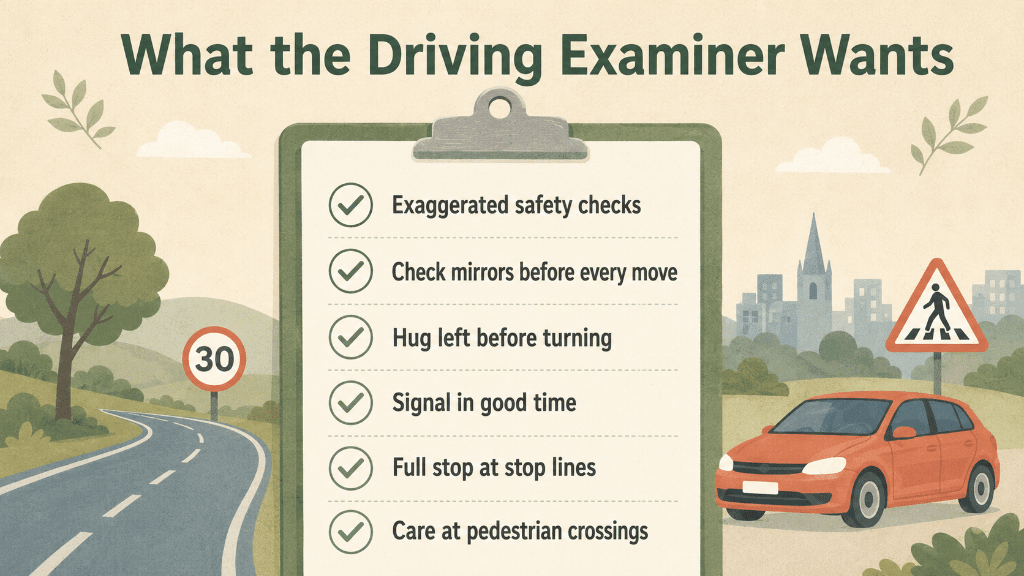
What examiners want to see:
- Exaggerated safety checks—visibly look left, right, and over your shoulder, and check mirrors before every move. If they can’t see you checking, it didn’t happen.
- Correct lane positioning—hug the left before a left turn, signal in good time, and follow the course exactly.
- Full stops at stop lines (a complete stop, wheels still), and careful pedestrian-crossing procedure.
Many people fail once or twice simply because they drive naturally instead of “to the test.” A single paper-driver lesson or a practice session that teaches the course conventions is often the difference between passing and repeat trips. Treat it as learning a specific choreography, not proving you’re a competent driver.
Costs and Practical Tips
- Budget a few thousand yen each for the translation, the test/application fees, and license issuance—modest, but the time cost is the bigger one.
- Go early in the day. Licensing centers process conversions on weekdays only, and the document review can take a while.
- Bring more documents than you think you need—old passports, proof of address, anything that ties your identity and residence history together.
- Confirm details with your own prefecture. Procedures, available test languages, and booking systems vary by location. Check your prefectural police or licensing-center website (for Tokyo, the Metropolitan Police Department’s gaimen kirikae page).
Frequently Asked Questions
How long can I drive on my home-country license?
With a Geneva Convention IDP (or an official translation if you’re from Switzerland, Germany, France, Belgium, Monaco, or Taiwan), up to one year from your date of entry. After that, residents must convert to a Japanese license.
Do I have to take a driving test?
It depends on your country. Holders from about 29 exempt countries/regions (the UK, Australia, South Korea, Germany, France, Taiwan, and others) skip both tests. Everyone else—including India, China, and most US states—must pass a knowledge test and a practical driving test.
Can tourists convert their license?
No—since October 1, 2025, you must submit a residence record (住民票), so conversion is only for registered residents. Tourists drive on an IDP instead.
Why is the driving test so hard?
Because it grades exact Japanese procedure—visible safety checks, lane positioning, full stops—rather than general driving ability. Pass rates for non-exempt applicants can be low. A practice lesson on the course conventions helps a lot.
What’s the 3-month rule?
You must prove you stayed in the country that issued your license for at least three months after obtaining it, shown via passport entry/exit records. It prevents people from getting a license abroad solely to convert it.
Key Takeaways
- Short stays: drive on a Geneva IDP (or an official translation for 6 specific places) for one year; long-term residents must convert via gaimen kirikae.
- Your country decides the difficulty: ~29 countries/regions skip both tests; everyone else (India, China, most US states, etc.) takes a knowledge and a driving test.
- Since October 2025 it’s stricter: residence record required, knowledge test now 50 questions at 90%, and a tougher driving test.
- Prove three months in the issuing country, get a JAF translation, and book early—appointments are the slow part.
- If you must take the driving test, learn the exact course procedure (a paper-driver lesson pays off); passing is about technique, not raw skill.




One thought on “Converting a Foreign Driver’s License in Japan (Gaimen Kirikae): 2026 Guide”