Japan is one of the smoothest countries in the world to travel — and yet first-timers still hit a predictable set of bumps, from the dizzying train map to a menu with no pictures to the strange feeling of being overwhelmed by how efficient everything is. The good news: every one of these challenges has a simple fix. Here’s the honest rundown, plus the part most guides skip — how to handle the mental overwhelm.
The Challenges at a Glance (and the One-Line Fix)
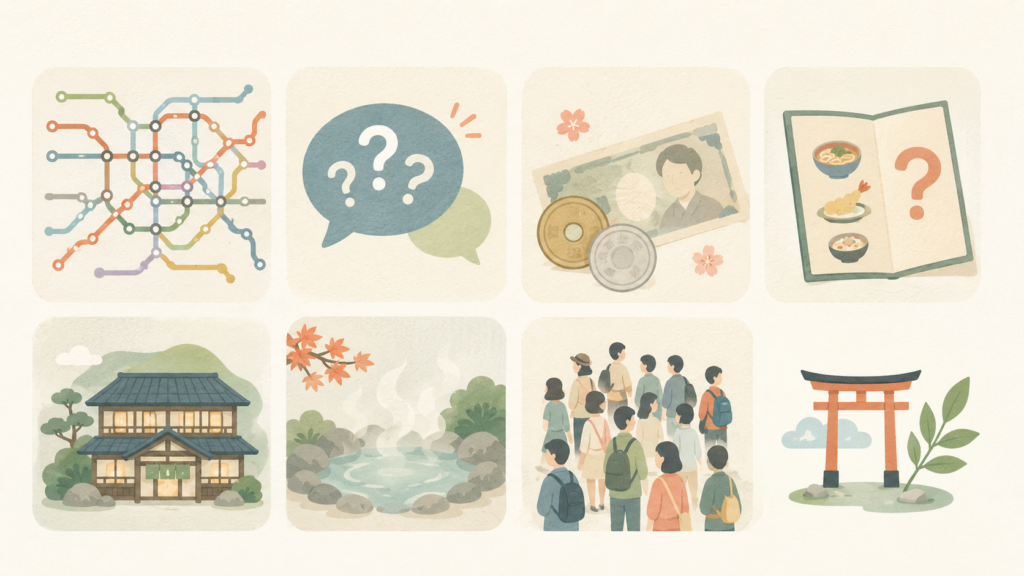
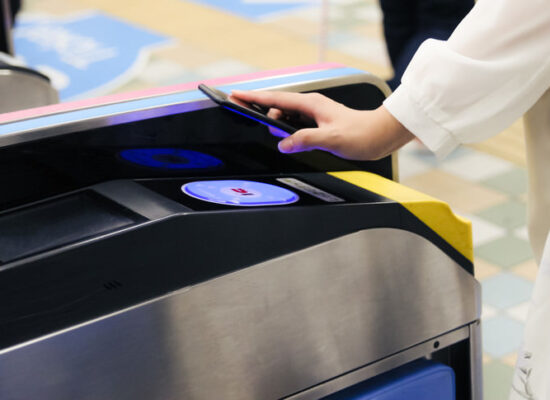
- The train maze. Multiple operators, huge stations, dozens of exits. Fix: let Google Maps pick your route and platform, tap an IC card instead of buying tickets, and follow the station’s exit numbers. Full guide: getting around Japan.
- The language barrier. Limited spoken English, signs in kanji. Fix: Google Translate’s camera, a few key phrases, and writing things down. See travelling without Japanese.
- Cash in a cashless age. Small shops, shrines, and some top restaurants are cash-only, and QR apps like PayPay are hard to set up without a Japanese number. Fix: carry ¥10,000–¥20,000, withdraw from 7-Eleven or Japan Post ATMs, and use a Wise card for fair rates. More in Money in Japan.
- Menus and dietary needs. No pictures, hidden dashi, little customization. Fix: use photo menus and teishoku sets, carry an allergy card, and scan menus with a translator. See our food guide.
- Shopping quirks. Tax-free paperwork, paid plastic bags, cash-only artisans. Fix: bring your passport and a reusable bag. (Prices have been tax-included by law since 2021, so the shelf price is usually what you pay; tax-free needs a passport and ~¥5,000 minimum, and the system is changing in late 2026 — check current rules.)
- Booking and ryokan customs. Some inns don’t book in English; ryokan have shoes-off, yukata, and fixed meal times. Fix: book on Agoda or Booking.com and read up first. See hotels & ryokans and budget stays.
- Rural gaps. Fewer trains, less English, simpler facilities. Fix: check the timetable before you go, keep a translation app and an eSIM for data, and embrace the tatami-and-shared-bath charm.
That covers the logistics. The harder challenges are the ones nobody warns you about — the crowds, and the overwhelm.
Surviving the Crowds and Rush Hour
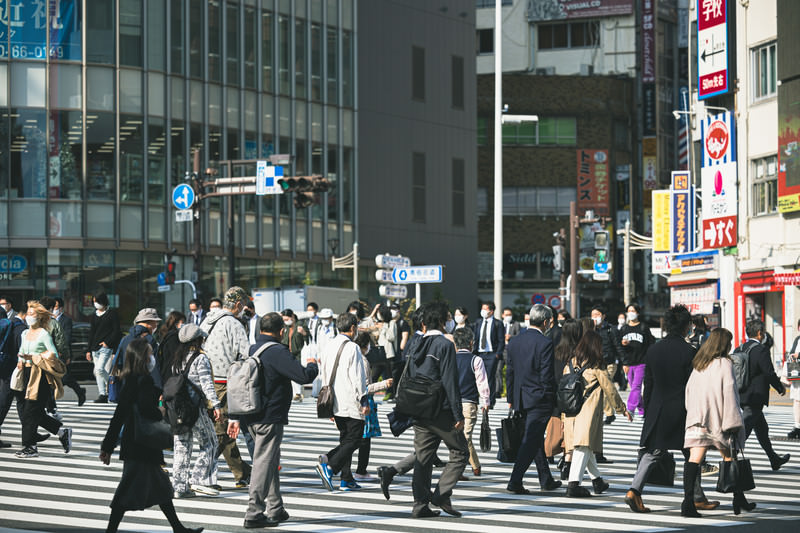
Tokyo runs one of the busiest train networks on earth, and at peak times the carriages are packed to a degree that genuinely surprises visitors. A few ways to keep it painless:
- Dodge the rush. Avoid roughly 7:30–9:30 a.m. and 5:00–7:00 p.m. if you can — sightsee mid-morning instead.
- Mind the last train. Most lines stop around midnight, and a late-night taxi is pricey. Check the time of your last connection before a night out.
- Go with the flow. In a packed train, people keep to themselves and avoid eye contact — it’s not coldness, it’s “civil inattention,” the quiet courtesy that makes density bearable. Keep your bag in front, your voice down, and move with the crowd.
Finding Calm in the Chaos
The antidote to sensory overload is never far away — Japanese cities are full of pockets of quiet if you know to look:
- Parks and gardens — Yoyogi Park or the Shinjuku Gyoen in Tokyo, Osaka Castle Park, or any temple garden.
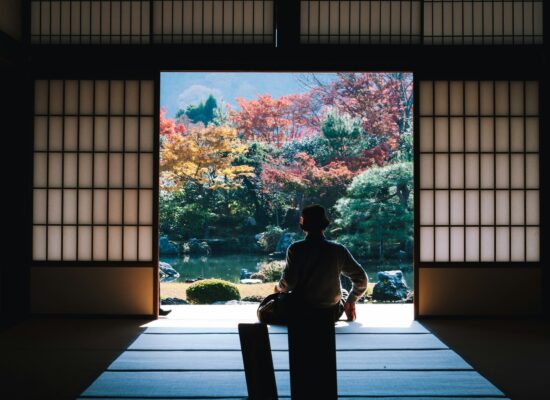
- Temples and shrines — even in the busiest districts, stepping through a shrine gate drops the noise instantly.
- Side streets and small cafes — one block off a main drag like Shibuya, the crowds thin and the kissaten (old-school cafes) appear.
Build these breaks into your day on purpose, and consider basing yourself a stop or two outside the busiest districts for calmer evenings.
Managing Overwhelm and Culture Shock
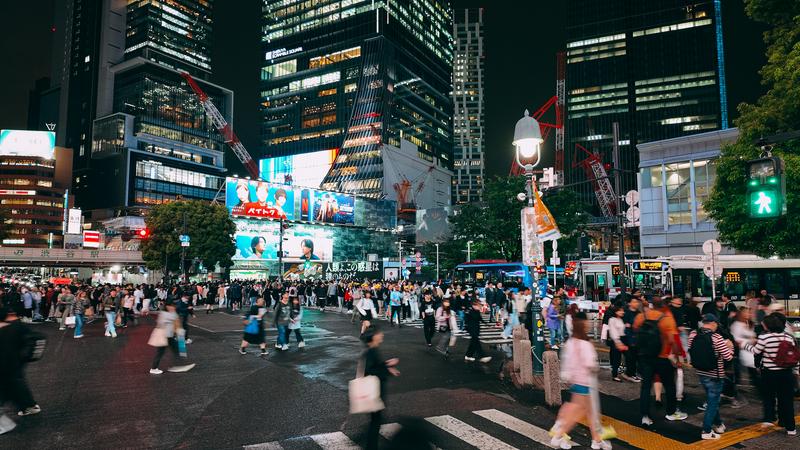
Here’s the challenge no checklist solves: Japan can simply feel like a lot. The pace, the crowds, the unreadable signs, the endless choices, and a society that runs with such quiet precision that you worry about getting in the way. That low-grade overwhelm is the real culture shock — and it’s completely normal.
That feeling my husband describes after moving here from India sums it up: everyone around you moves with a quiet certainty, like they’re following a manual you were never handed, and you’re the one who doesn’t know the rules yet. It eases fast. A few things that help:
- Do less. Decision fatigue is real when every street has a hundred options. Pick a few things a day and leave space to wander — see our ready-made itineraries if planning feels overwhelming.
- Build in downtime. A park bench or a slow coffee resets you more than one more attraction.
- Lower the stakes. You will get on a wrong train or fumble a payment. Nobody minds, and it’s part of the trip.
- Just ask. Even with no shared language, a “sumimasen” and a map on your phone gets you real help — people here are remarkably kind to a lost visitor.
Slow down, expect a few stumbles, and the efficiency that felt like pressure on day one starts to feel like a gift by day three.
What Tends to Surprise First-Timers
Beyond logistics, a few cultural quirks catch nearly everyone off guard. None are problems — just good to expect:
- How quiet it is. Trains and public spaces are hushed; a loud conversation makes you the odd one out. Phones go on silent.
- “No” is rarely said outright. A hesitant “chotto…,” a drawn breath, or an apologetic smile usually means no. Don’t push.
- Order is everything. Neat queues and set procedures rule. Going off-script — asking to swap a dish, paying the “wrong” way — can fluster staff, so watch what locals do.
- Service is intensely attentive. The bowing, gift-wrapping, and care can feel like a lot at first; relax and enjoy it. And remember, there’s no tipping.
- Little small talk with strangers. Warmth here shows up as quiet helpfulness rather than chit-chat — it isn’t unfriendliness.
The Good News: What’s Easier Than You Think
For all the challenges, Japan is in many ways the least stressful country to travel — these more than balance the scales:
- It’s remarkably safe. You can walk almost anywhere at night, and dropped wallets are routinely handed in with the cash still inside.
- It’s spotless. Streets and public toilets are clean despite the lack of bins.
- It runs on time. Trains arrive to the minute, so your plans actually hold together.
- People will help. Ask politely and someone will often walk you to where you’re going.
- The conbini saves you. A convenience store on every corner means food, an ATM, a clean toilet, and tickets, 24/7.
Frequently Asked Questions
What’s the biggest challenge for tourists in Japan?
Usually the combination of the complex train network and the language barrier — but both are easily managed with Google Maps, an IC card, and a translation app. The subtler challenge is simply feeling overwhelmed, which fades within a few days.
Do I really need cash in Japan?
Yes, some. Cards and IC cards cover most spending, but small shops, shrines, and certain restaurants are cash-only. Carry ¥10,000–¥20,000 and withdraw more from a 7-Eleven or Japan Post ATM.
Can I get around without speaking Japanese?
Easily in the cities, and very doable in rural areas with a translation app. See our full guide to travelling without Japanese.
How do I avoid the worst of the crowds?
Skip the 7:30–9:30 a.m. and 5:00–7:00 p.m. rush, sightsee mid-morning and mid-afternoon, and duck into parks, temples, and side streets to recharge.
Is it normal to feel overwhelmed in Japan?
Completely. The pace, crowds, and unfamiliar systems hit almost every first-timer. Do less, build in breaks, and don’t sweat small mistakes — it passes quickly.
The Bottom Line
Every challenge here has a fix, and none should keep you from going. Lean on the apps, carry a little cash, learn a few words, leave room to breathe, and forgive yourself the odd wrong turn. Then start building the fun part with our trip-planning guide and best places to visit by region.

2 thoughts on “Common Challenges of Traveling in Japan (and How to Beat Them) — 2026”