If you’re moving to Japan with kids, the school system is one of the first things that feels like a black box. How are the grades structured? Will my child cope without fluent Japanese? And the question most parents only think to ask later: where does this road actually lead — to university, and then to a job? This guide walks the whole path, from first grade to that first job offer, so you can decide how the Japanese track fits your family.
Education in Japan: A Brief Overview
The 6-3-3-4 Structure
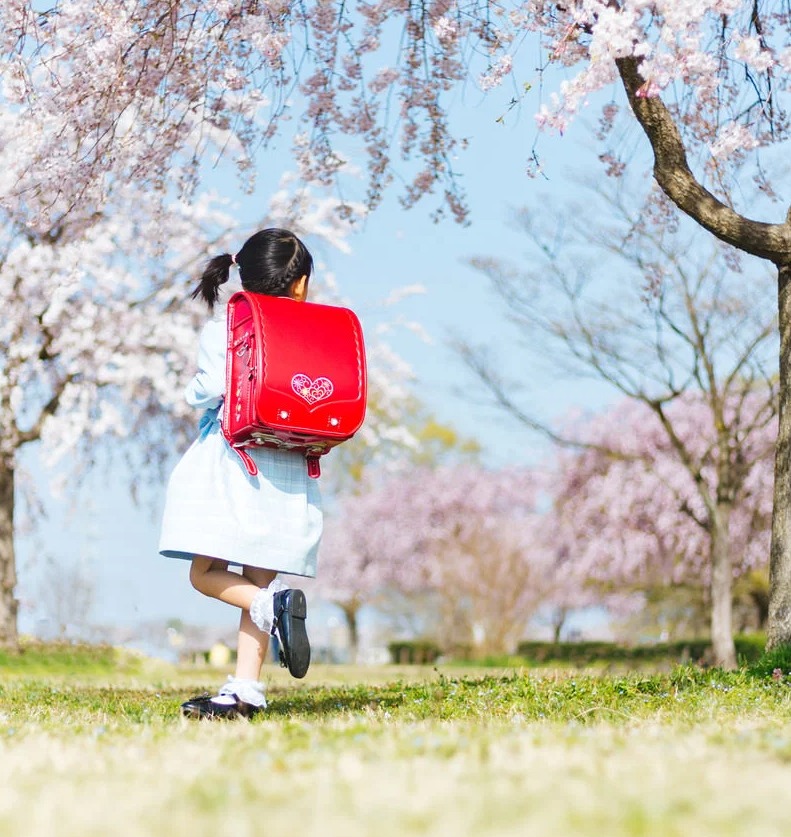
Japan runs on a 6-3-3-4 system. The 6-3 part — elementary and junior high — is compulsory for every child up to age 15.
- Elementary School (6 years): Starting at age six. Beyond academics, kids learn life skills — they serve each other school lunch and do daily “cleaning time,” which builds a real sense of responsibility. Public elementary school is tuition-free.
- Junior High School (3 years): A broader curriculum, and the point where exam pressure starts to appear. Public junior high is tuition-free.
- High School (3 years): Students choose an academic or vocational track. Enrollment is near-universal — about 98.9% of students go on to high school (2021), even though it isn’t compulsory.
- Higher Education (4 years): Universities, junior colleges, and technical routes. One standout alternative is the Kosen (高専), five-year technical colleges known for robotics and engineering, with famously high post-graduation employment.
The Academic Year
Japan’s school year starts in April and ends in March, split into three terms (April–July, September–December, January–March). This trips up a lot of international families, because most other countries start in September. If you’re transferring in, expect to think carefully about timing — a mid-year move can mean repeating or skipping part of a grade depending on the school.
What School Life Is Actually Like
A few things surprise newcomers. Kids clean their own classrooms. Lunch is eaten together in the classroom, often served by the students themselves. Clubs (部活, bukatsu) can eat up evenings and weekends, especially in junior high and high school. And then there are the school rules.
School Rules and Appearance
Some Japanese schools are strict about appearance — hair, socks, even underwear color at the extreme end. These are sometimes called “black rules” (ブラック校則), and they’re a live debate. Many of the harshest ones have been relaxed or scrapped, but they haven’t vanished, and private schools in particular can still be rigid.

Why are some schools so strict about appearance?
It traces back to the campus unrest of the 1960s–70s, when strict discipline was brought in to keep order. School violence faded by the ’80s and many rules were loosened, but the culture lingers. Schools with higher academic standards, and international schools, tend to be the most relaxed. There’s even a crowdsourced national list of school rules at 全国校則一覧.

Exams and Cram Schools (Juku)
Entrance exams shape a Japanese student’s path more than almost anything else, and that pressure has produced a whole parallel industry: juku (塾), or cram schools. Many students attend juku after regular classes for extra coaching, especially in the run-up to high school and university entrance exams. It’s so normal that not attending one can feel like the exception.
I genuinely enjoyed my juku. The structured study noticeably boosted my scores, and it let me meet students from other schools — a second community outside my own classroom.
Choosing a High School: The First Big Gate
High school is where the exam machine first gets serious. It isn’t compulsory, and it isn’t automatic — most students sit an entrance exam (高校受験) to get in. Public high schools usually weigh two things: your junior-high report-card score (内申点) built up over the previous years, plus a one-day academic test. Private high schools run their own exams and can also admit students by recommendation.
Two forks matter here. The first is academic vs. vocational: academic high schools point toward university, while vocational and specialized schools (commerce, technology, agriculture, and the like) build job-ready skills. The second is public vs. private. Public high schools are cheaper and, thanks to a national tuition-support program, often effectively free for many households; private high schools cost more but may offer particular programs, facilities, or a smoother internal route onward. Because admission leans partly on those accumulated junior-high grades, this is the stage where a lot of families first turn to juku in earnest.
For an expat child arriving mid-system, the high school entrance point can be the trickiest transition — it rewards years of in-system grades and Japanese-language test performance. If you’re moving with a child near this age, talk to the target school and your municipal board of education early about how transfers and exams are handled.
Getting Into University: How Admissions Really Work
This is the part most expat parents underestimate, partly because it works nothing like the US or UK. There’s no single application portal, no essay-plus-recommendations package that travels across schools, and — this surprises a lot of people — no advantage from donations or family legacy. Japanese university admission is, overwhelmingly, about your performance on exams and your high school record. Money and connections don’t buy a seat.
The Common Test and National Universities
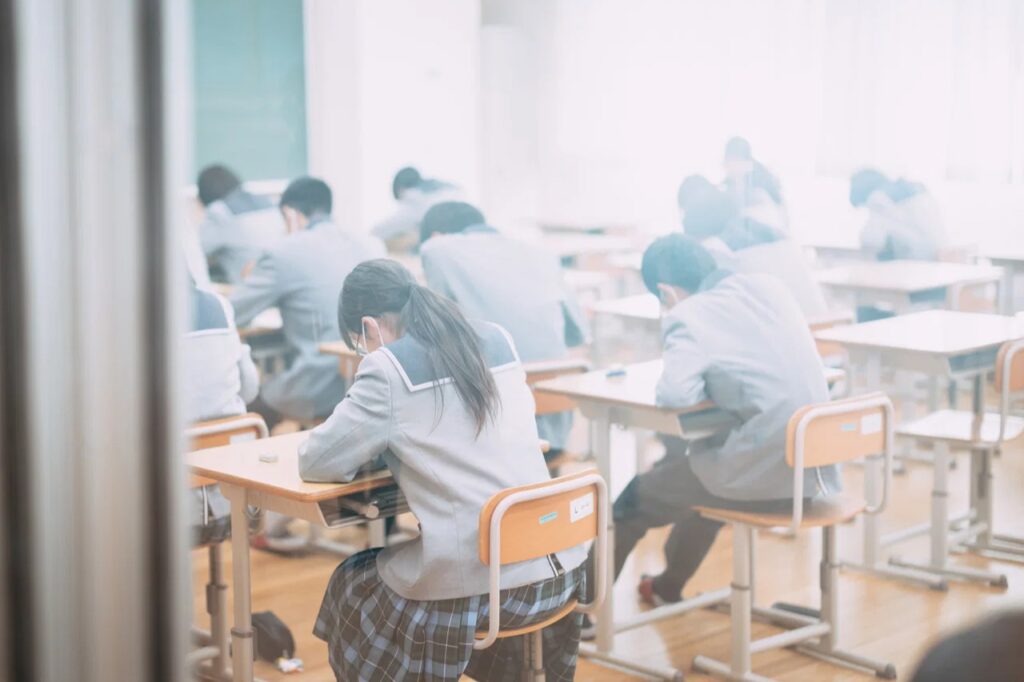
Most university hopefuls sit the Common Test (大学入学共通テスト) in mid-January — a standardized national exam that replaced the old Center Test in 2021. For national and public universities, the Common Test is only round one. Each university then runs its own second-stage exam (二次試験), split into an early window (前期) and a later one (後期).
Here’s the catch that defines the whole experience: roughly 80% of national-university seats are filled in the early (前期) round, and if you pass it and enroll, you can’t take the later round. In practice, that makes the national-university route feel like one big shot a year. Miss it, and for many families the realistic choice is a private university, a gap year of full-time exam prep (浪人, rōnin), or rethinking the plan.
Private Universities: Exams Aren’t the Main Door Anymore
If you picture Japanese admissions as one brutal written exam, that image is increasingly out of date. At private universities — which is where most students go — over 60% of entrants now arrive through recommendation or comprehensive selection rather than a general written test. The general written exam (一般選抜) is now the minority route.
| Route | Japanese | What it is |
|---|---|---|
| General selection | 一般選抜 | The classic written entrance exam (often plus the Common Test). |
| School recommendation | 学校推薦型選抜 | Your high school recommends you; relies heavily on grades and conduct. (Formerly “推薦入試.”) |
| Comprehensive selection | 総合型選抜 | Holistic — essays, interviews, presentations, motivation. The closest thing to a US-style application. (Formerly “AO入試.”) |
For a family coming from a more holistic admissions culture, the comprehensive route (総合型選抜) is often the most familiar-feeling door — and it’s the fastest-growing one. Many of these decisions are settled before the calendar year even ends, well ahead of the January exams.
How Competitive Is It, Really?
It depends enormously on where you aim. Top national universities and flagship private ones (the kind everyone has heard of) draw applicant-to-seat ratios of several to one in popular faculties, and the prep starts years out. But Japan’s birth rate has been falling for decades, so outside the most sought-after schools, capacity now outstrips demand — there are universities that struggle to fill seats. The pressure is intense at the top and surprisingly soft at the bottom.
The Real Finish Line: New-Grad Hiring

Here’s the piece that makes the whole exam pyramid make sense. In Japan, the single biggest on-ramp to a career is something called shinsotsu ikkatsu saiyō (新卒一括採用) — synchronized mass hiring of new graduates. Companies recruit fresh grads in one big annual cycle, with almost everyone starting work the following April.
What makes it powerful is that companies hire on potential, not experience. As a new grad, you don’t need a track record — your “new-grad card” (新卒ブランド) opens the widest range of employers you’ll ever have access to. Job hunting (就活, shūkatsu) kicks off more than a year before graduation, and landing a role on schedule matters more than it does in most countries.
This is shifting. Year-round hiring (通年採用) is rising — around a third of companies used it for 2025 graduates, and some big names (Fujitsu among them) are moving away from rigid mass hiring. But the new-grad advantage is still very real, and it’s exactly why families take the exam ladder so seriously: it leads to that first cycle.
Why this matters for expat families: the new-grad system rewards being in the right place at the right time. A child who graduates from an overseas university on a different calendar, or finishes older than the typical cohort, can find themselves outside the standard new-grad window — though global tracks and year-round hiring are slowly opening more doors. If your long game is for your child to work in Japan, it’s worth understanding this on-ramp before you choose an education path, not after.
Common Challenges for Expat Families
Language Barriers and Support
The most immediate hurdle is language — for the child in class, and for parents trying to decode a stream of Japanese-only handouts, forms, and group-chat messages. You are not alone in this: the number of children in public schools who need Japanese-language support reached about 69,000 in 2023, a record high that has roughly doubled over the past 15 years. Schools are still catching up, and support varies a lot by municipality, but it does exist.
A few resources worth bookmarking:
- Guidebook for Starting School (Hyogo Prefecture Board of Education): covers the school system, enrollment, costs, rules, scholarships, and tuition-waiver programs in 16 languages.
- MarMar (Kamakura-based): an English site organizing parenting and schooling info by the child’s age, plus offline meetups.
English Education (and Why Your Kid Might Out-Speak the Teacher)
Japanese English education has long leaned on grammar, reading, and writing — a bit like studying Latin. The result is a generation strong on grammar but often hesitant in conversation. That’s changing: more middle and high school English is now taught in English, and university entrance exams have been reworked to test all four skills, including speaking and listening. Whether it fully sticks is still an open question. For a bilingual or English-native child, the upshot is that English class may feel slow — something to weigh when choosing between a local school and an international one.
Local School vs. International School
There’s no universal right answer, but the trade-off is real. A local Japanese school means fast immersion, free or low-cost tuition, deep integration into Japanese life, and a natural line into the Japanese university and new-grad system. An international school keeps your child in English (or another curriculum), eases re-entry to a home country or a third country later, but costs far more and sits outside the domestic exam-and-hiring track. The longer your family expects to stay — and whether you imagine your child building a career in Japan — should weigh heavily on the choice. For a deeper look, see “Choosing the Right International Schools in Tokyo.”
Younger children? Start with our guide to childcare in Japan — Hoikuen, Yochien, and more.
FAQs: The Japanese Education System
Q1. Is public school in Japan free?
Public elementary and junior high are tuition-free, and they’re open to foreign residents. You’ll still pay for things like lunches, supplies, uniforms, and activities. Public high school tuition is also largely covered by a national support program, subject to some conditions.
Q2. Can my child get into a Japanese university without perfect Japanese?
Yes, though it depends on the route. Mainstream exams are in Japanese, so fluency matters there. But many universities run English-taught degree programs and dedicated admissions for international students, and the comprehensive-selection route (総合型選抜) can value a non-standard background. Strong Japanese widens your options considerably, but it isn’t the only path.
Q3. Do donations or connections help with admission?
Essentially no — and this genuinely surprises families from countries where they can. Undergraduate admission is based on exams and academic record, not legacy status or financial gifts. It’s one of the more level parts of the system.
Q4. What is “new-grad hiring” and why does everyone mention it?
It’s Japan’s tradition of hiring fresh graduates in one synchronized annual cycle, judging them on potential rather than experience. Landing a job during this window gives the broadest access to employers, which is why getting onto — and staying on — the academic schedule carries so much weight here. Year-round hiring is growing but hasn’t replaced it.
Q5. We’re only staying a few years. Local school or international?
For a short, defined stay, many families lean international (or a home-country curriculum) to make the eventual move back smoother. For an open-ended or long stay — especially if your child might build a career in Japan — a local school offers immersion and a direct line into the domestic university and hiring system. Visit both kinds before deciding; the feel on the ground tells you a lot.
Conclusion
Japan’s education system can look opaque from the outside, but it follows a clear logic once you see the whole arc: a structured 6-3-3-4 path, an exam ladder that still matters at the top, and a new-grad hiring system waiting at the end. For expat parents, the real decision isn’t memorizing every detail — it’s choosing how much of this track you want your child on, and for how long. Start with that question, lean on your municipality and local parent communities for the specifics, and the rest gets a lot clearer.


One thought on “Schooling System in Japan: What an Expat Parent Needs to Know (2026)”